Professional Numerology Association
Login to Your Account Back to Home

Numerology Articles

Learn and deepen your numerology knowledge with our professional articles

All Categories Introduction to Numerology Personal Numbers Relationships Career & Finances Numerology & Dates Spiritual Growth Advanced Techniques Case Studies FAQ
Karma vs Pattern: How to Tell a “Lesson” Apart From a Psychological Habit

Karma vs Pattern: How to Tell a “Lesson” Apart From a Psychological Habit

Not everything that repeats is “karma,” and not every struggle deserves drama. This article teaches the PNA standard for separating a karmic lesson from a psychological habit or stress response: four diagnostic questions (time, context, trigger, cost), signs that suggest an active lesson vs signs of stress habit, and why numbers are a direction for investigation rather than proof. You also get a 14-day experiment protocol that replaces arguments with measurable outcomes, plus examples showing how to work responsibly without fear, blame, or fatalism.

How to Explain Karmic Debt Numbers 13, 14, 16, 19 Without Fear or Over-Mystification

How to Explain Karmic Debt Numbers 13, 14, 16, 19 Without Fear or Over-Mystification

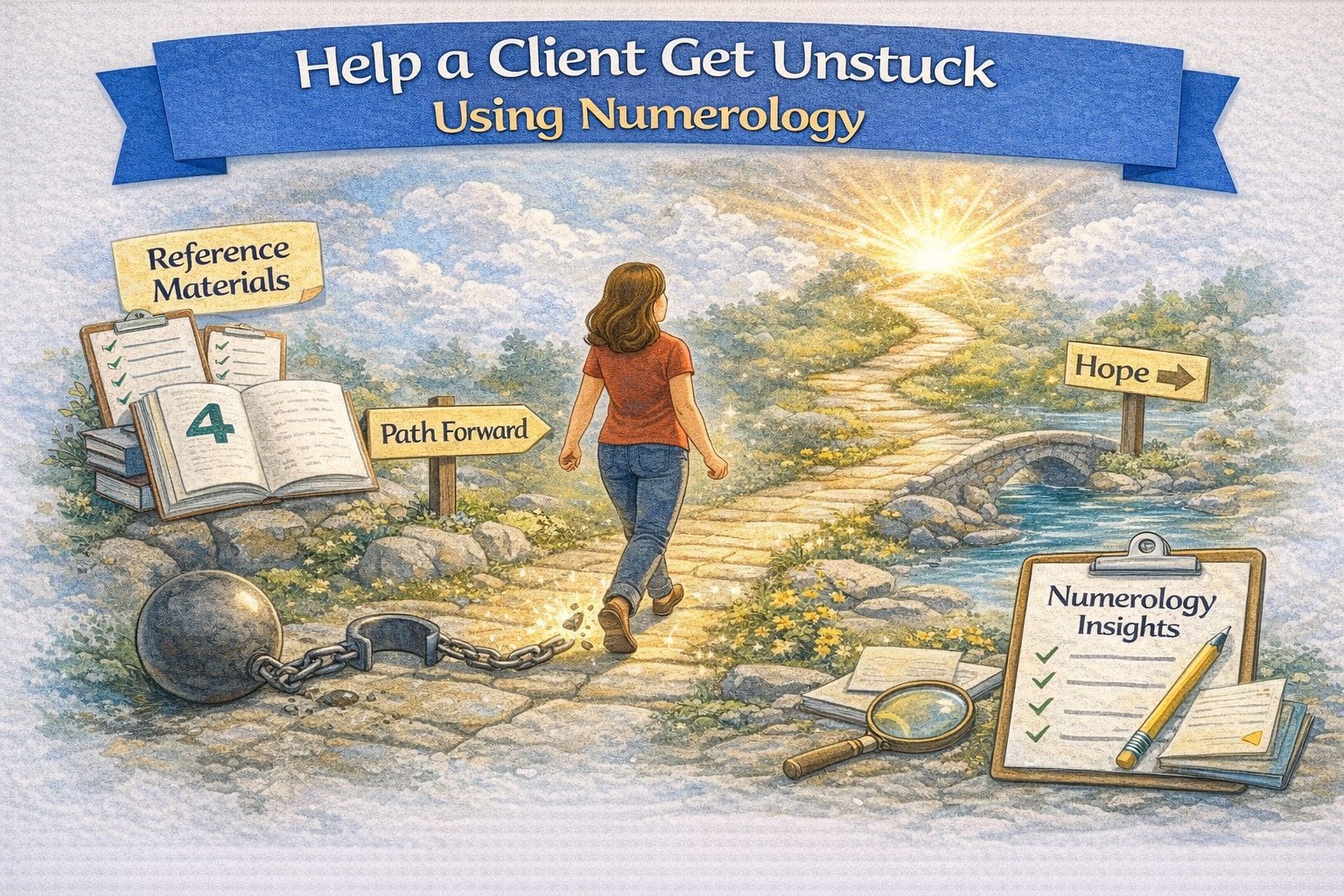
Karmic debt numbers 13/4, 14/5, 16/7, and 19/1 do not mean punishment or bad luck. In the PNA standard they point to a repeating behavioral loop that returns until it is learned: the same trigger, the same automatic response, the same cost. This article teaches how to present the topic without fear and without mystical exaggeration, how to diagnose whether the pattern is truly active through real-world repetition, and how to work each number through practical correction protocols with weekly metrics. This turns “karma” from a scary label into a measurable method for change.

How to Craft One Key Sentence That Summarizes the Personal Chart in a Clear, Memorable Way

How to Craft One Key Sentence That Summarizes the Personal Chart in a Clear, Memorable Way

A key sentence is the tool that connects a numerology chart to real change. Instead of sending the client out with many meanings and little direction, you give one sentence they remember, that brings them back on track, and that can be measured. This article teaches the PNA key-sentence formula (gift + boundary + action), how to choose the core pattern from a full chart, seven ready templates for common chart types, and three tests that ensure the sentence is not generic or cliché. You also get a template that turns the sentence into a weekly metric, plus a full case study showing how the right sentence creates fast behavioral shift.

Short Diagnostic Questions for Each Number: Making Sure the Reading Matches Reality

Short Diagnostic Questions for Each Number: Making Sure the Reading Matches Reality

Short diagnostic questions are what turns a numerology reading from a monologue into a professional session. This article gives you ready question sets for numbers 1-9, three rules for asking without leading the client, and what to listen for to distinguish gift vs cost, triggers, and repeating patterns. You also get a diagnostic framework for master numbers and karmic debt numbers that keeps the work grounded and non-dramatic. Finally, you get a translation template that turns answers into a weekly plan with an action sentence and a measurable metric, so the reading actually matches reality and changes behavior.

How to Read Tension Between Numbers: Forward Pull vs Brakes Without Blaming the Client

How to Read Tension Between Numbers: Forward Pull vs Brakes Without Blaming the Client

Many clients feel “I want to move forward, but something in me stops me,” and interpret it as lack of discipline or a character flaw. This article teaches the PNA standard for reading tension: identify a pull mechanism and a brake mechanism, understand the triggers that activate each one, and build a protocol that calms the brake while creating small, stable movement. You get seven common tension patterns (1-2, 5-4, 3-7, 8-2, 6-5, 7-1, 9-8), measurable practices for each, and a weekly worksheet that turns “stuck” into action without shame.

Repeating Numbers in the Birth Date or the Name: What It Means and How Not to Drown in Too Much Information

Repeating Numbers in the Birth Date or the Name: What It Means and How Not to Drown in Too Much Information

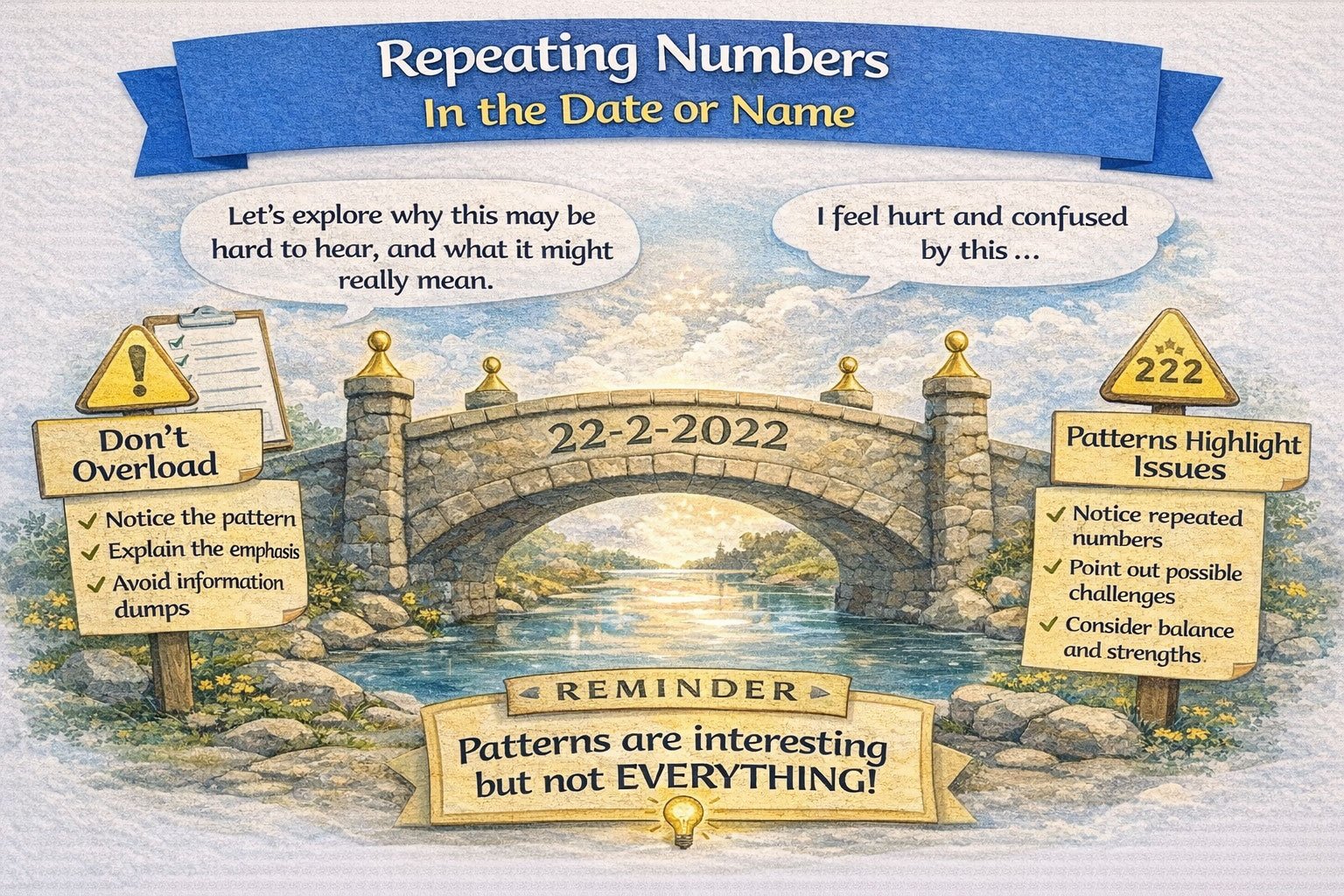
Repeating numbers in the birth date or the name are an amplifier: not destiny and not prophecy, but a clear signal of which mechanisms are more available and how they activate under specific triggers. This article teaches how to separate meaningful repetition from statistical noise, understand four repetition types (birth date, name, core positions, synchronicity), interpret repetition through three practical parameters (what it amplifies, when it activates, what to do this week), and avoid the common mistakes that overwhelm or scare clients. You also get a six-line clinical tool and a full case study showing how “lots of 4” becomes a stability protocol that actually works.

How to Explain Master Numbers 11, 22, 33 Without Drama or Over-Spiritualized Claims

How to Explain Master Numbers 11, 22, 33 Without Drama or Over-Spiritualized Claims

Master numbers 11, 22, and 33 are one of the most confusing areas in numerology because it is easy to turn them into drama or mystical claims. This article teaches the PNA standard: a master number is high potential with high demand, and it always rests on a base (11 on 2, 22 on 4, 33 on 6). You learn how to test whether a master is active in real life or only “written,” how to recognize the real risks (nervous overload, perfectionism, burnout), and how to build measurable weekly practices that turn master pressure into stable impact. You also get clinic-ready lines and a full case study that shows how a master becomes a tool, not a burden.

When One Number “Cancels” Another and When It Only Softens It: Layers, Not Contradictions

When One Number “Cancels” Another and When It Only Softens It: Layers, Not Contradictions

Clients feel contradiction when they hear labels instead of mechanisms. This article teaches layers, not conflicts: what people call “cancellation” is usually delay, softening, channeling, or cover through overcompensation. You get a PNA five-question model that dissolves confusion, six common contradiction patterns (1-2, 4-5, 6-5, 7-3, 8-2, 9-8) with balancing sentences, and a weekly layer-protocol template that turns conflict into measurable action. It transforms “I’m the opposite of myself” into a structured strategy that creates stability.

How to Translate Numbers Into Decision Language: Relationships, Work, Money, Health, Communication

How to Translate Numbers Into Decision Language: Relationships, Work, Money, Health, Communication

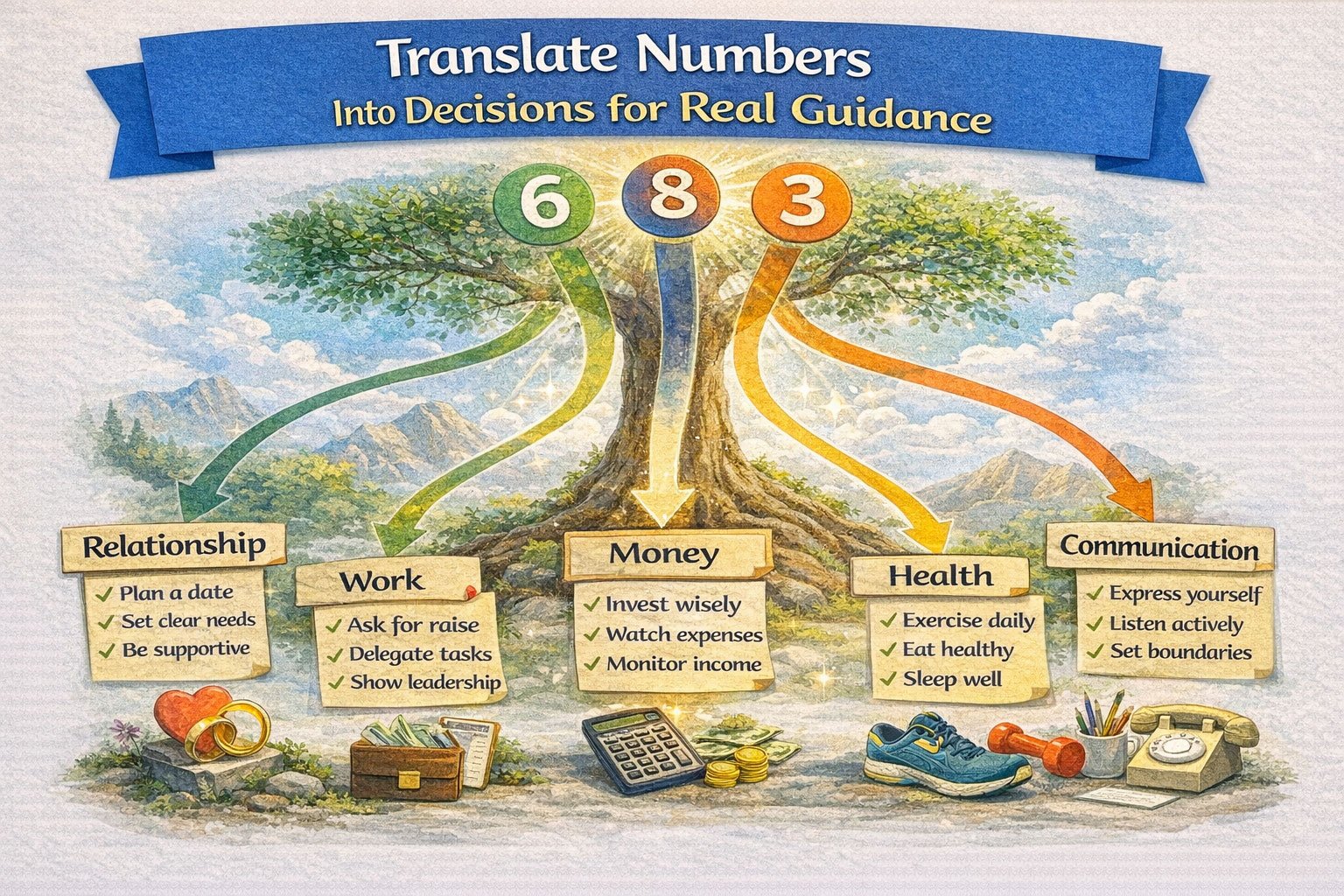
Numbers should not only describe who you are. They should upgrade what you do. This article teaches a PNA translation method that turns every number into a trigger, an automatic tendency, and a measurable weekly decision. You get a full decision map for numbers 1-9 across five arenas: relationships, work, money, health, and communication, plus a simple prioritization rule that prevents overload and a client-ready Weekly Decision Map that feels like a real protocol. It turns numerology from insight into action.

Reading Priorities: Which Number to Start With and Why

Reading Priorities: Which Number to Start With and Why

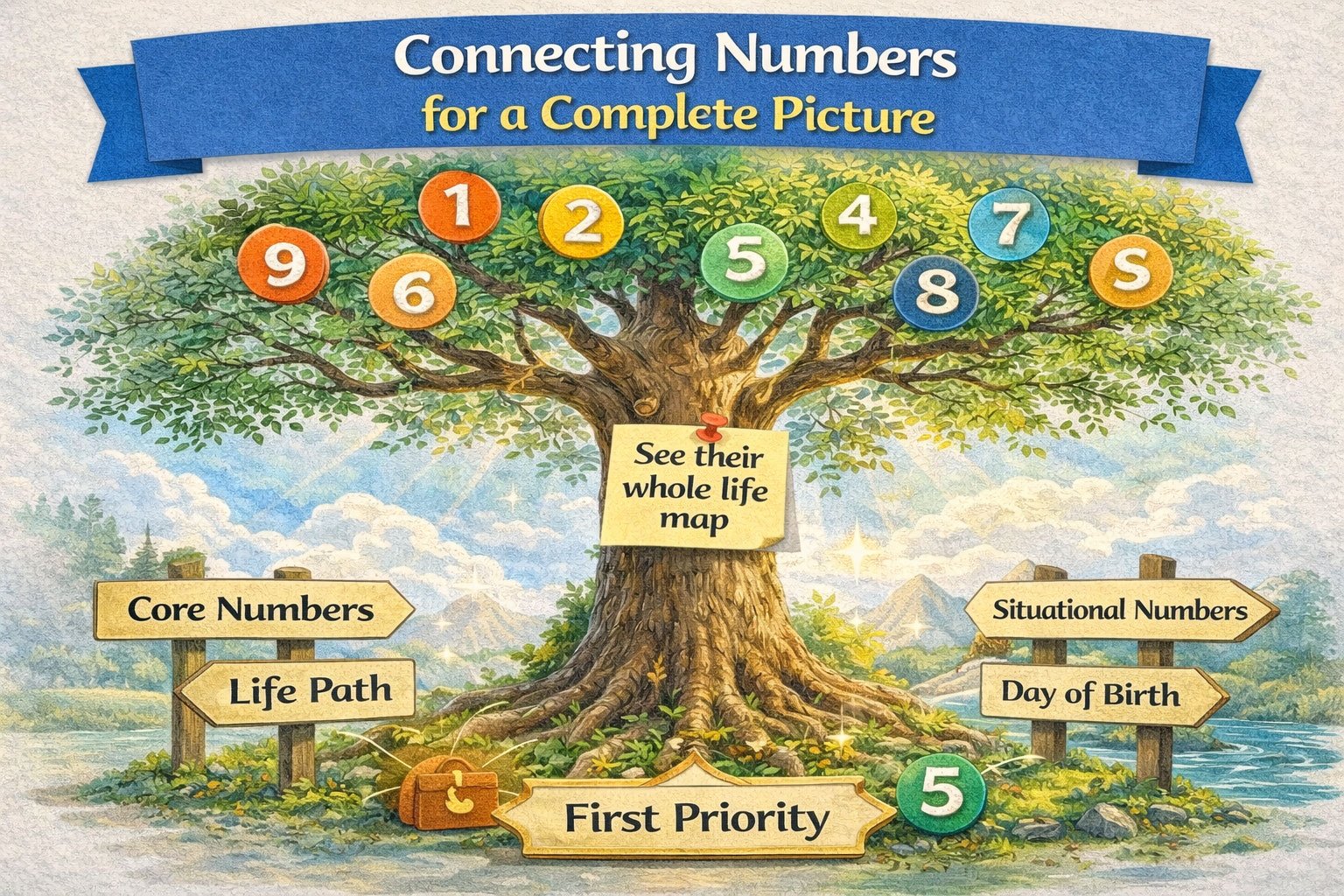
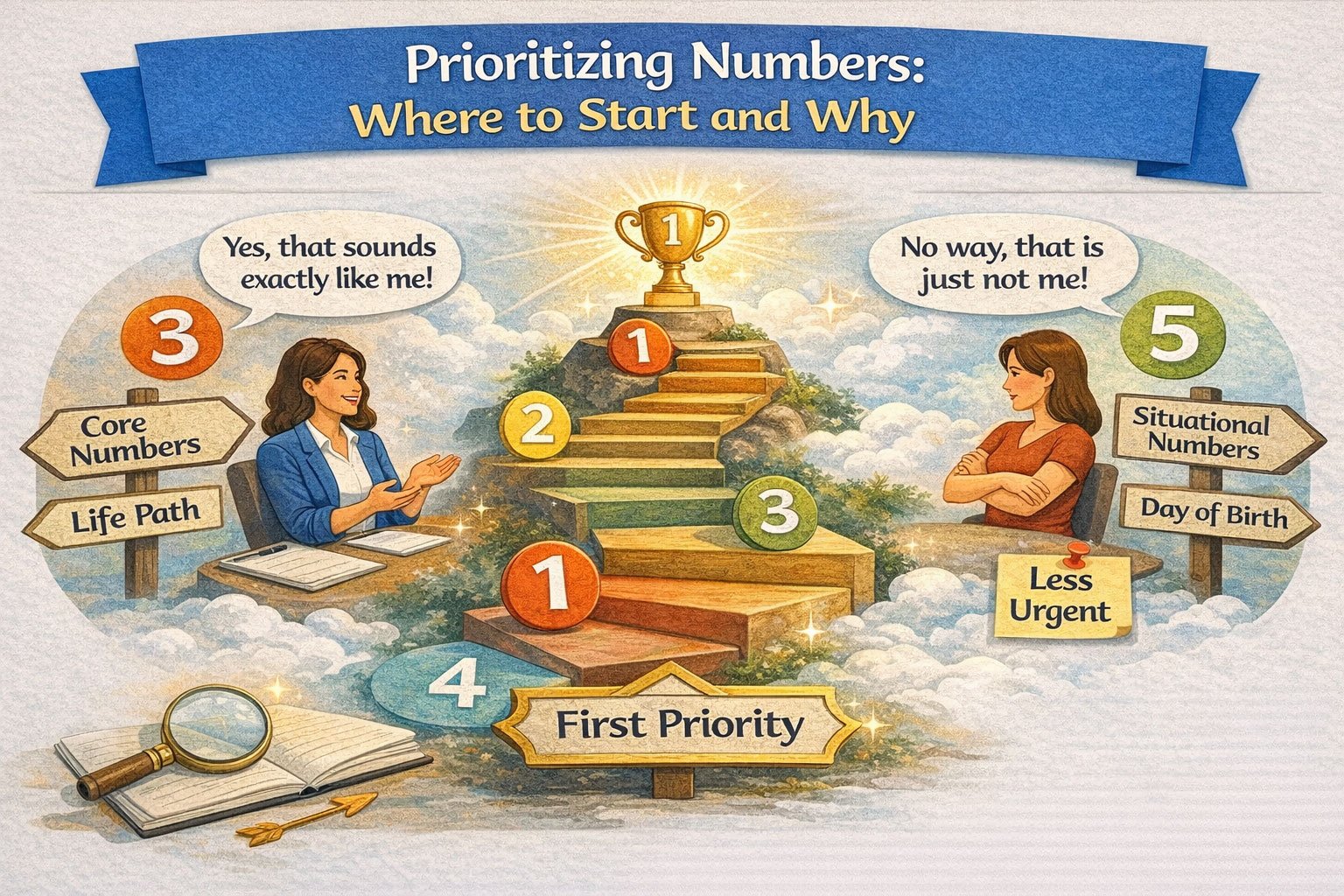
The biggest problem in overloaded readings is not accuracy, it is order. This article teaches a PNA priority model: three layers (core engine, decision style, fine tuning), six rules for choosing the best starting number, a double-entry method that creates immediate trust, a recommended order for full readings, and a simple prioritization rule for rich maps. You also get copy-paste calibration questions and a full case example showing how correct order turns chaos into an action path.

What to Do When a Client Identifies With One Number and Rejects Another Without Arguing

What to Do When a Client Identifies With One Number and Rejects Another Without Arguing

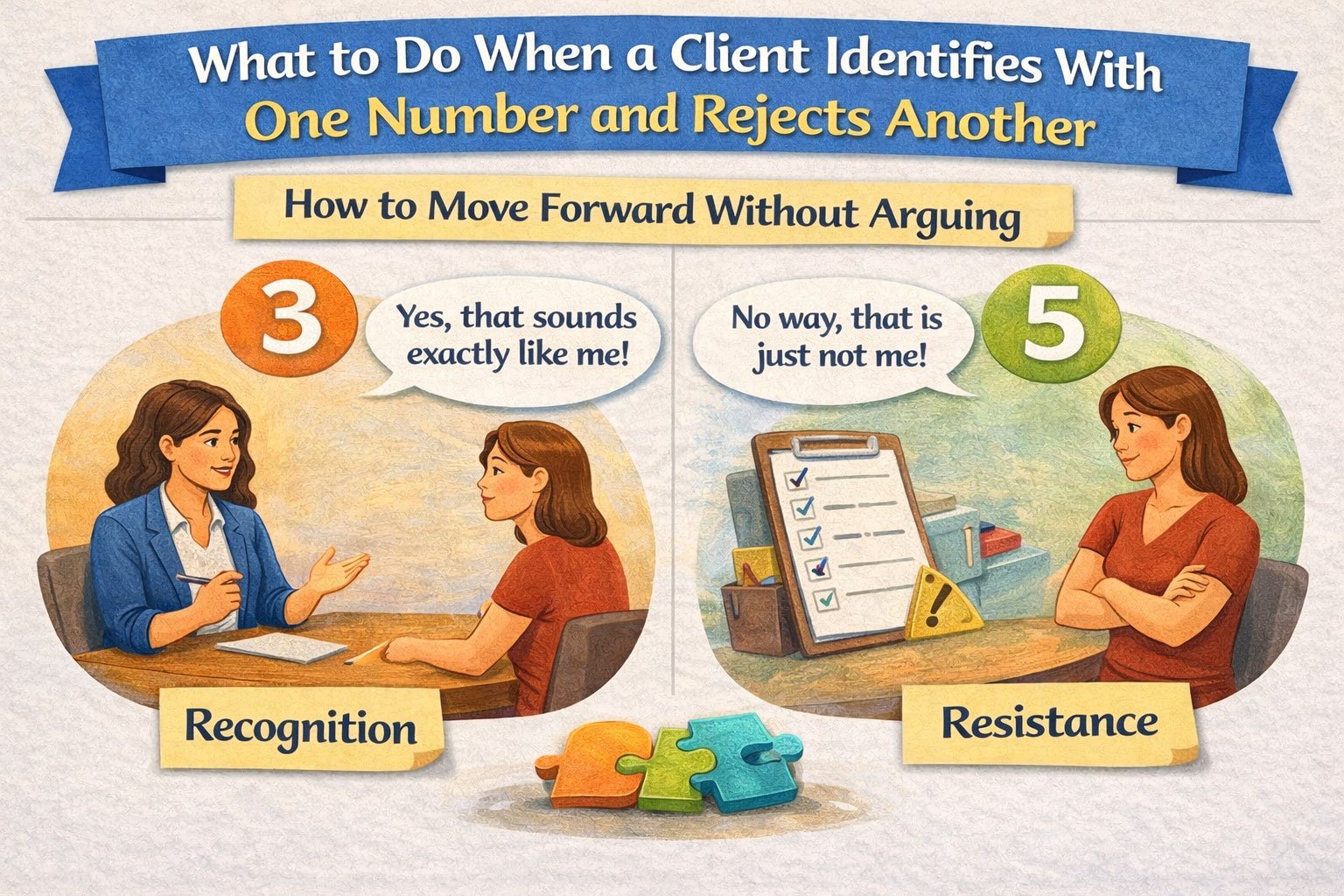
Strong readings often meet resistance: the client identifies with one number and rejects another. This article shows how to treat resistance as information, not failure. You learn five common resistance sources (judgmental language, identity threat, shame, blind spots, dormant themes) and the PNA 4-step script: validate, clarify, reality test, practice. You also get word-swap and dosage techniques, clinic-ready lines, and a full case example showing how to move from "that’s not me" into measurable work without argument.

How to Separate Talent From Challenge When Two Numbers Sound Similar

How to Separate Talent From Challenge When Two Numbers Sound Similar

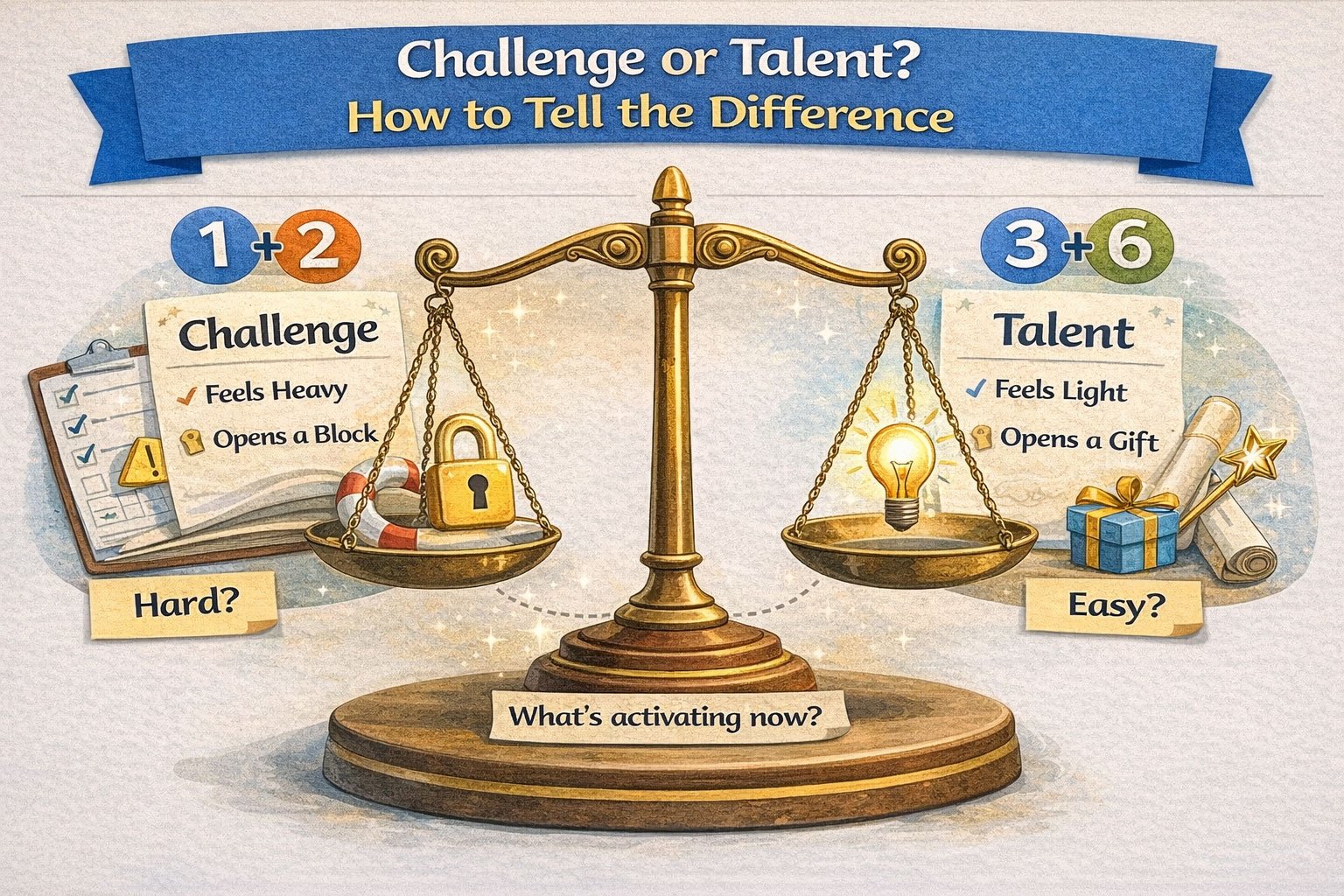
When two numbers sound similar, it’s easy to fall into confusion: is it "double talent" or "double problem"? This article teaches a PNA method that separates talent from challenge through four tests (flow, outcomes, cost, stress response) and three clear scenarios (talent amplification, challenge amplification, high output with high cost). You also get practical techniques to split the same label into two different mechanisms, a one-scene proof method, a weekly field test that settles doubt, and a full case study showing how real strengths stay powerful without turning into burnout.

Case Studies That Make Every Combination Real

Case Studies That Make Every Combination Real

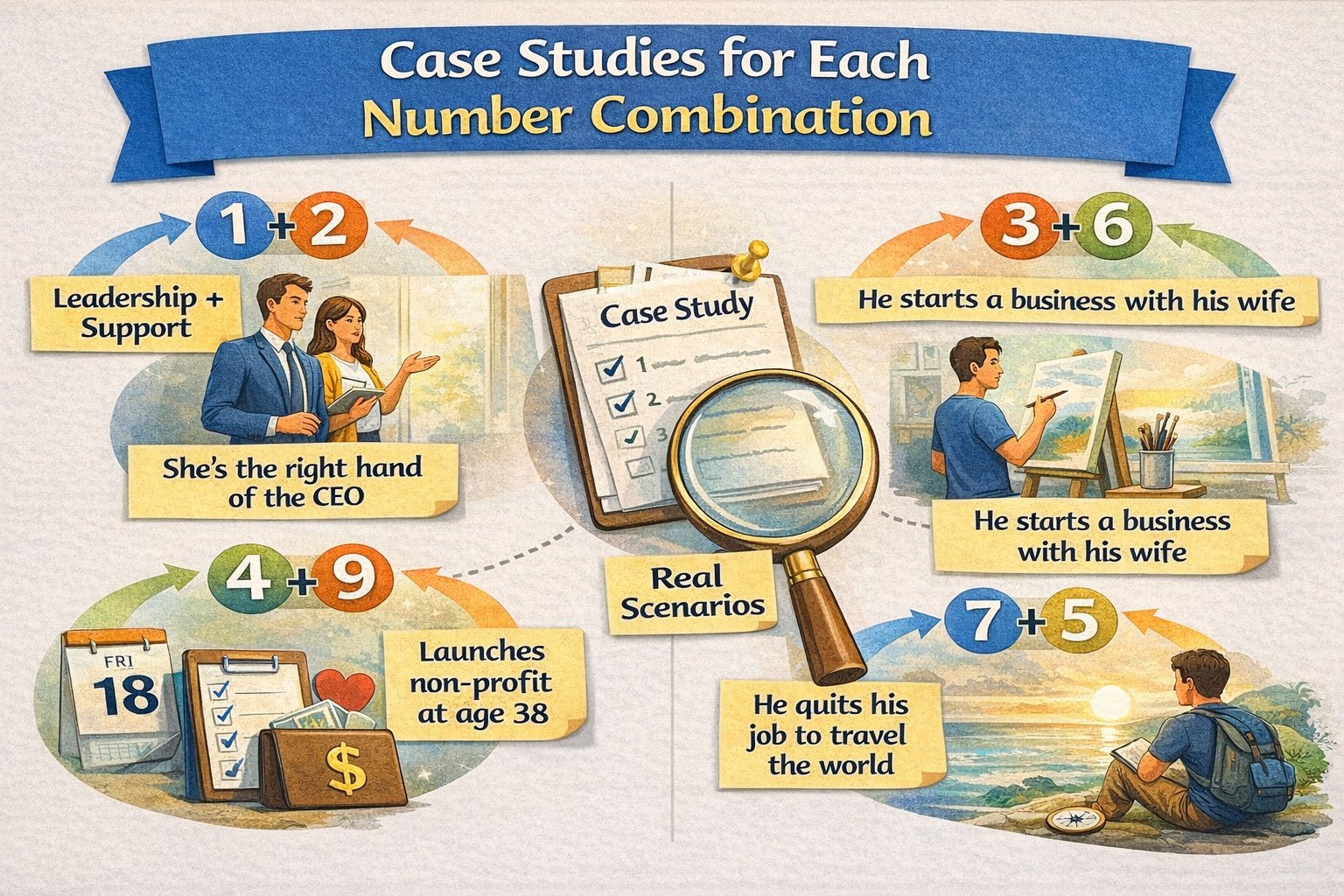
Clients don’t get convinced by interpretations. They get convinced by examples that prove accuracy. This article gives you a professional PNA case-study template and eight full combination cases showing real triggers, real costs, and one measurable practice that balances the system. You also learn how to choose the one story that fits the client, how to tell it without shame or drama, and how to end with an action sentence that creates change. It turns "combination reading" from diagnosis into a practical working story.

Common Number Combinations - and What They Mean in Real Life

Common Number Combinations - and What They Mean in Real Life

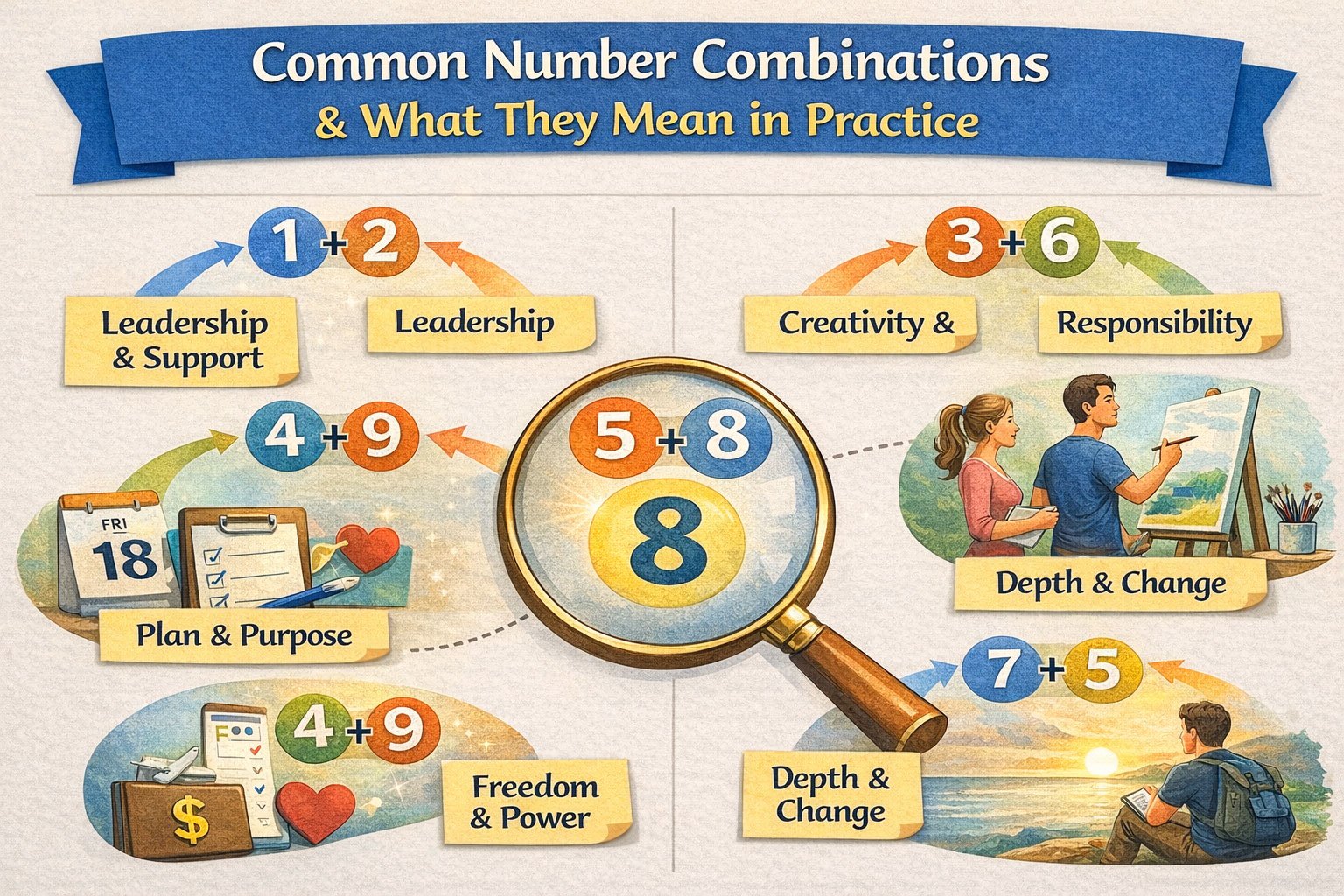
Combinations are where a reading becomes sharply personal, or painfully overwhelming. This article teaches a PNA model for reading combinations: one headline that holds the story, lead vs secondary engines, the inner tension, real daily-life scenes, and a measurable practice that balances the system. You also get a bank of common combinations with practical corrections, clinic-ready lines, and client summary templates. It turns "I’m both this and that" into one method that creates results.

Strong vs Missing Numbers: How to Explain It Without Confusion

Strong vs Missing Numbers: How to Explain It Without Confusion

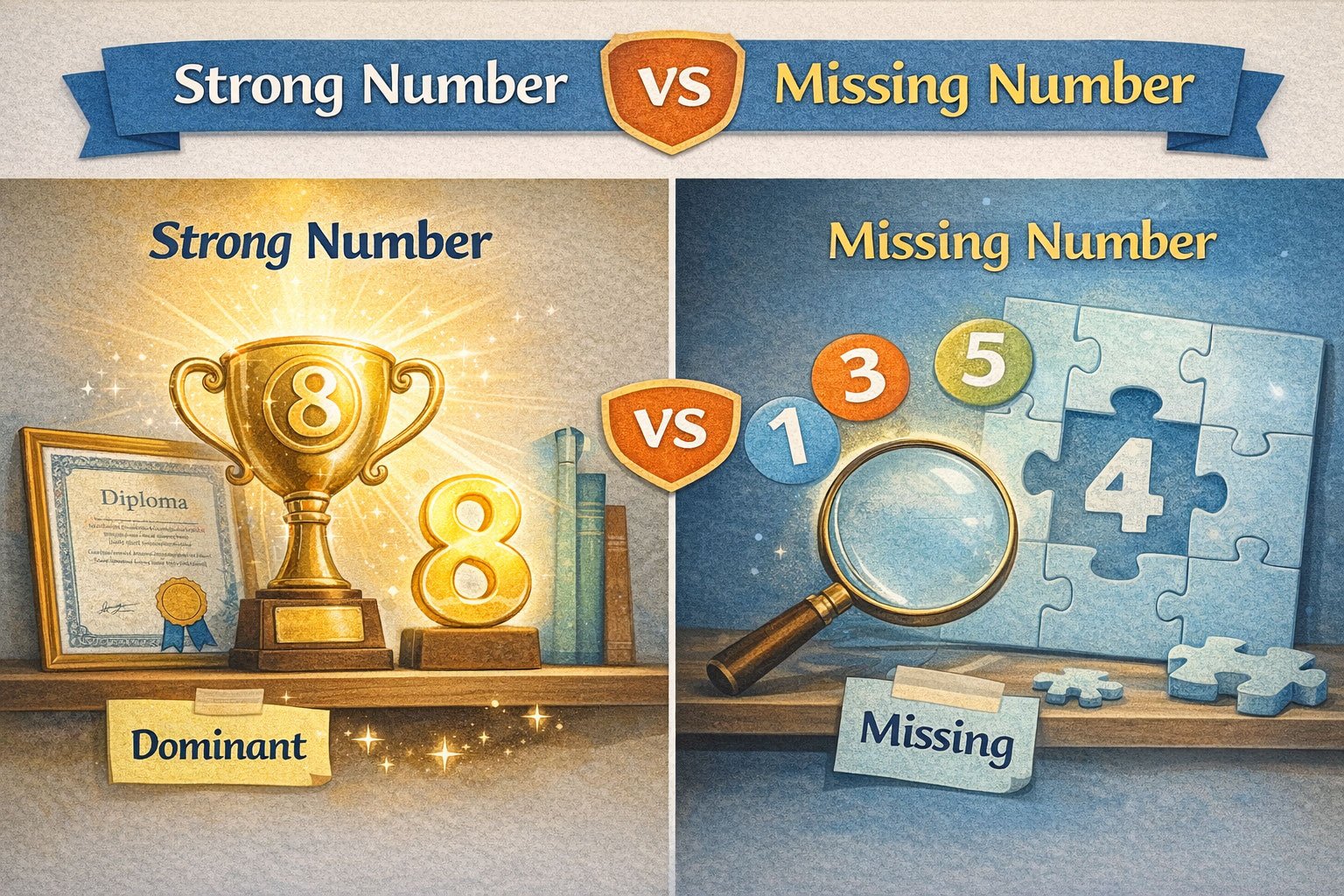
Strong and missing numbers are not grades. They are volume. This article shows how to explain strong vs missing without confusion or shame: what strong and missing actually mean, why strong needs boundaries and missing needs practice, how to identify whether missing is availability, fear, or confusion, how to turn the insight into one measurable weekly plan, which common strong-missing dynamics show up again and again, and how to move clients from "defect" into "tool." It turns a reading from description into action.

One Pattern Across Multiple Numbers: How to Spot It

One Pattern Across Multiple Numbers: How to Spot It

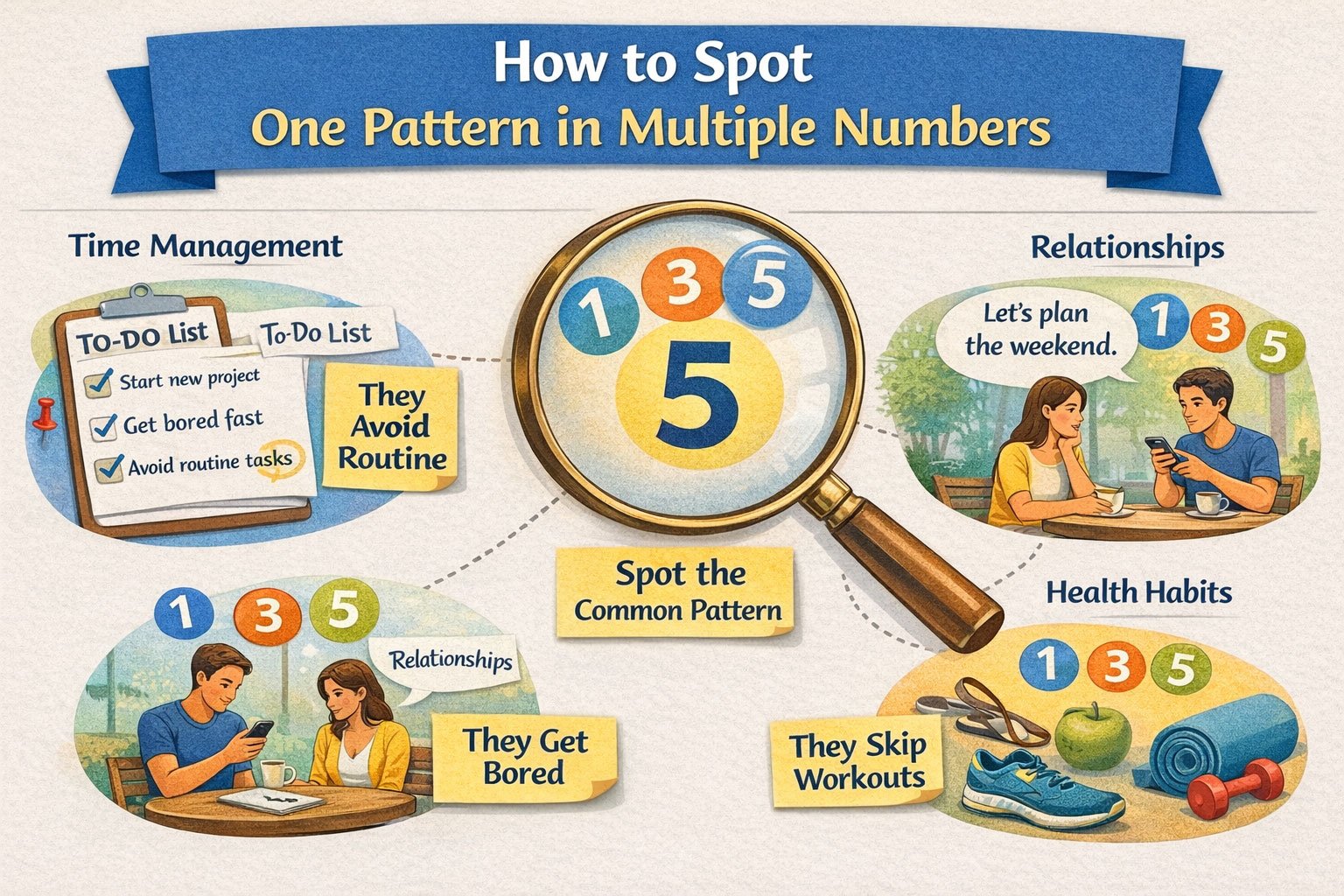
Most clients do not contradict themselves - they simply cannot see the repeating umbrella pattern across their numbers. This article teaches how to spot repetition through recurring words, cross-domain behavior, and one functional sentence. You get a bank of common patterns with practical translations, a plan template (trigger, cost, correction), ready-to-use clarity lines, and a case example showing how confusing numbers become one headline that drives action.

Presenting Core Numbers Clearly - Without Technical Talk

Presenting Core Numbers Clearly - Without Technical Talk

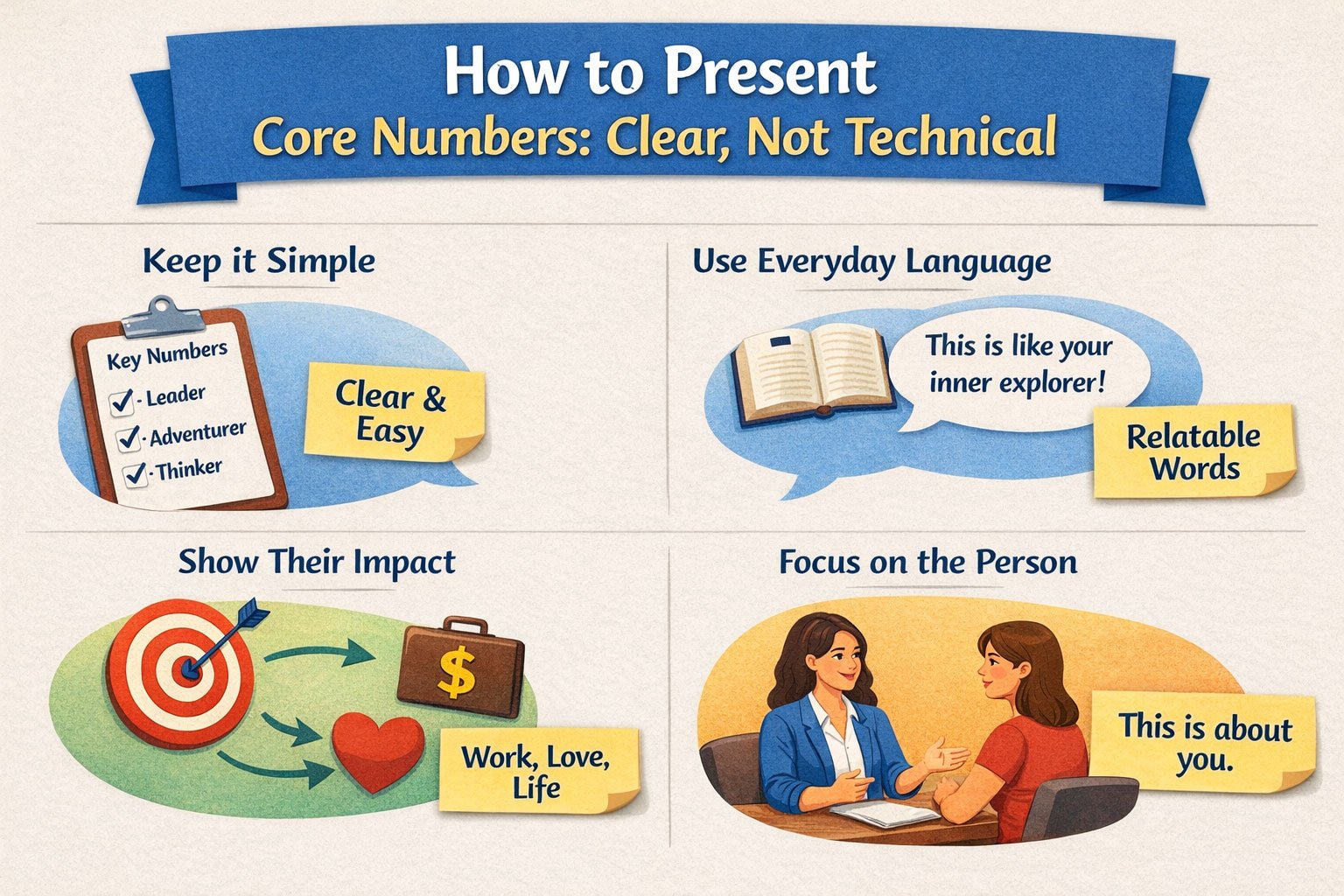
Most clients are not confused by numbers. They are confused by language. This article teaches how to present core numbers clearly and without technical talk: start with meaning instead of math, deliver one message at a time, use a 3-layer model with real-life situations, replace jargon with professional human language, build a story with a clean order, calibrate with diagnostic questions, and end with one measurable action. This turns "I have many numbers" into a simple path that creates results.

Subscribe for Full Access

Learn and deepen your numerology knowledge with our professional articles

Subscribe for Full Access

Accessibility

Text Size
Display
Reading
Spacing