Professional Numerology Association
Login to Your Account Back to Home

Numerology Articles

Learn and deepen your numerology knowledge with our professional articles

All Categories Introduction to Numerology Personal Numbers Relationships Career & Finances Numerology & Dates Spiritual Growth Advanced Techniques Case Studies FAQ
How to Build a Process That Makes Clients Feel Safe - A Numerology Container That Creates Trust, Depth, and Results

How to Build a Process That Makes Clients Feel Safe - A Numerology Container That Creates Trust, Depth, and Results

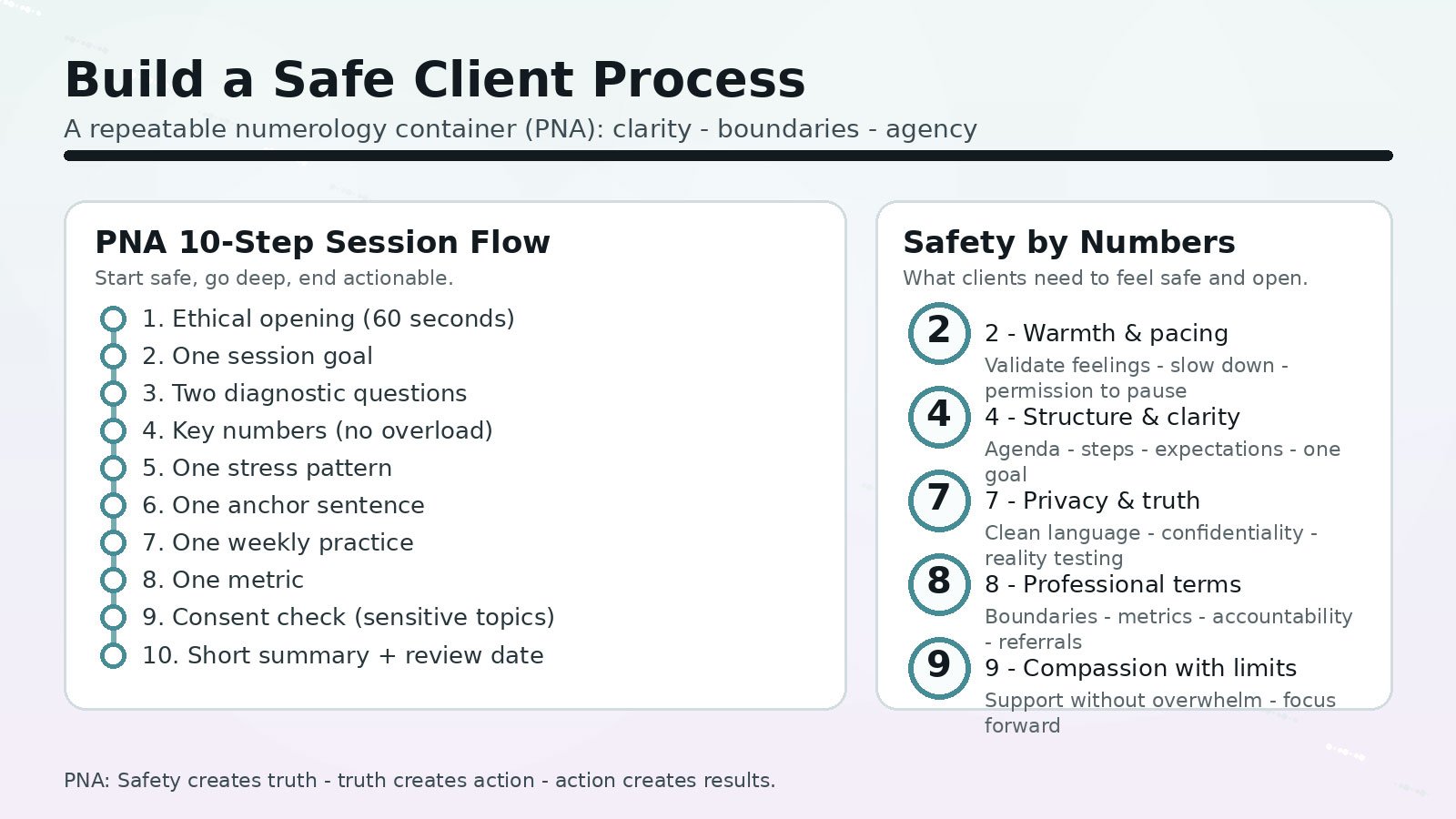
Safety is the foundation of a high-quality numerology reading. This article teaches the PNA method for building a repeatable safety container: clarity, boundaries, and agency. You’ll learn a 60-second session opening script, how to match language to different numerology safety styles (numbers 1-9), how Heart numbers reveal what clients need to relax and trust, how missing numbers create safety leaks and how to correct them with simple skills, how stress mode changes behavior, and how timing cycles (personal year and month) affect capacity. The article provides a practical 10-step session protocol that always ends with one anchor sentence, one weekly practice, and one measurable metric. The result is a grounded spiritual process that creates real progress without overwhelm and without dependency.
How to Write Professional Responsibility on Your Website and in Sessions - The PNA Numerology Standard (Clear, Human, Not Legalistic)

How to Write Professional Responsibility on Your Website and in Sessions - The PNA Numerology Standard (Clear, Human, Not Legalistic)

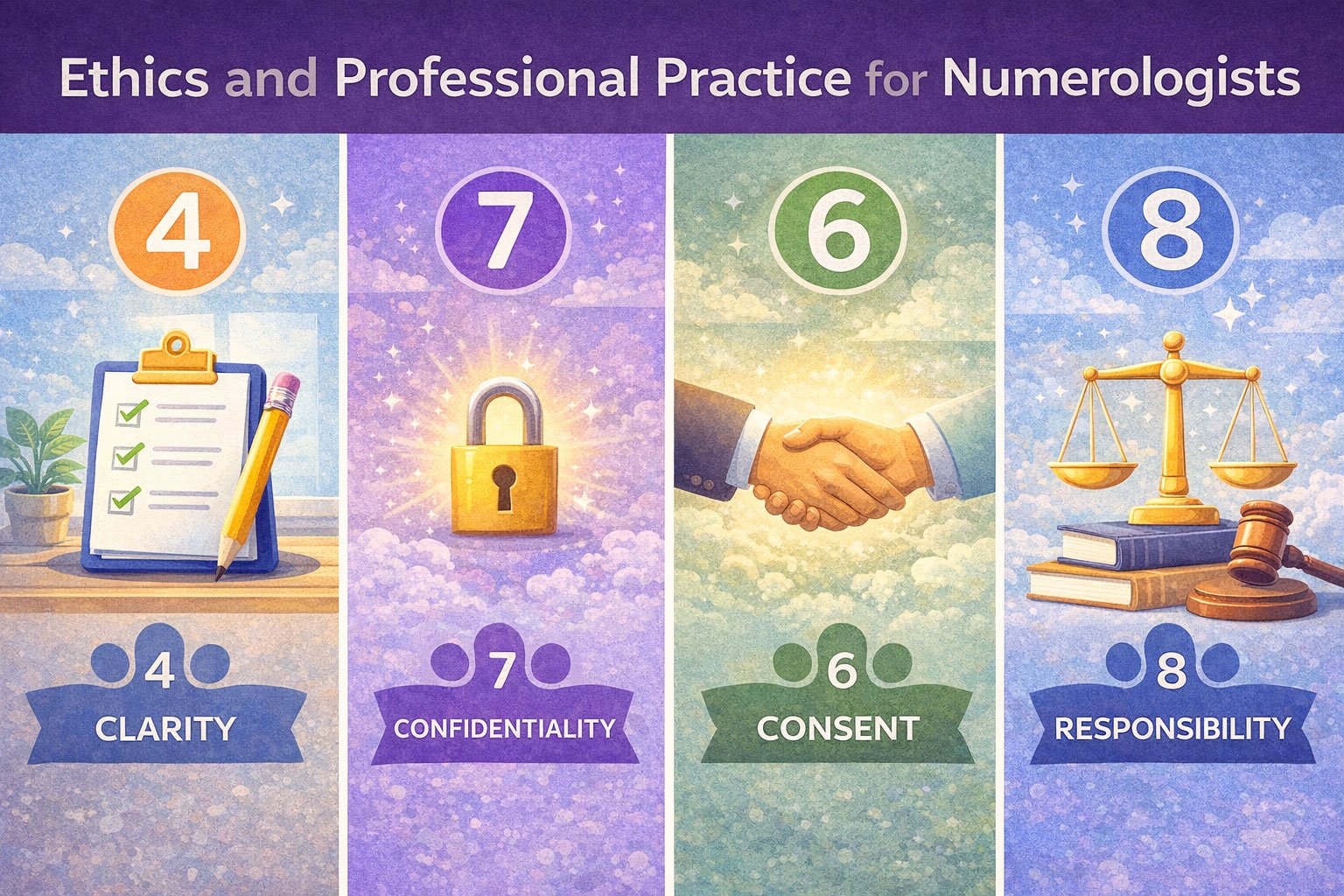
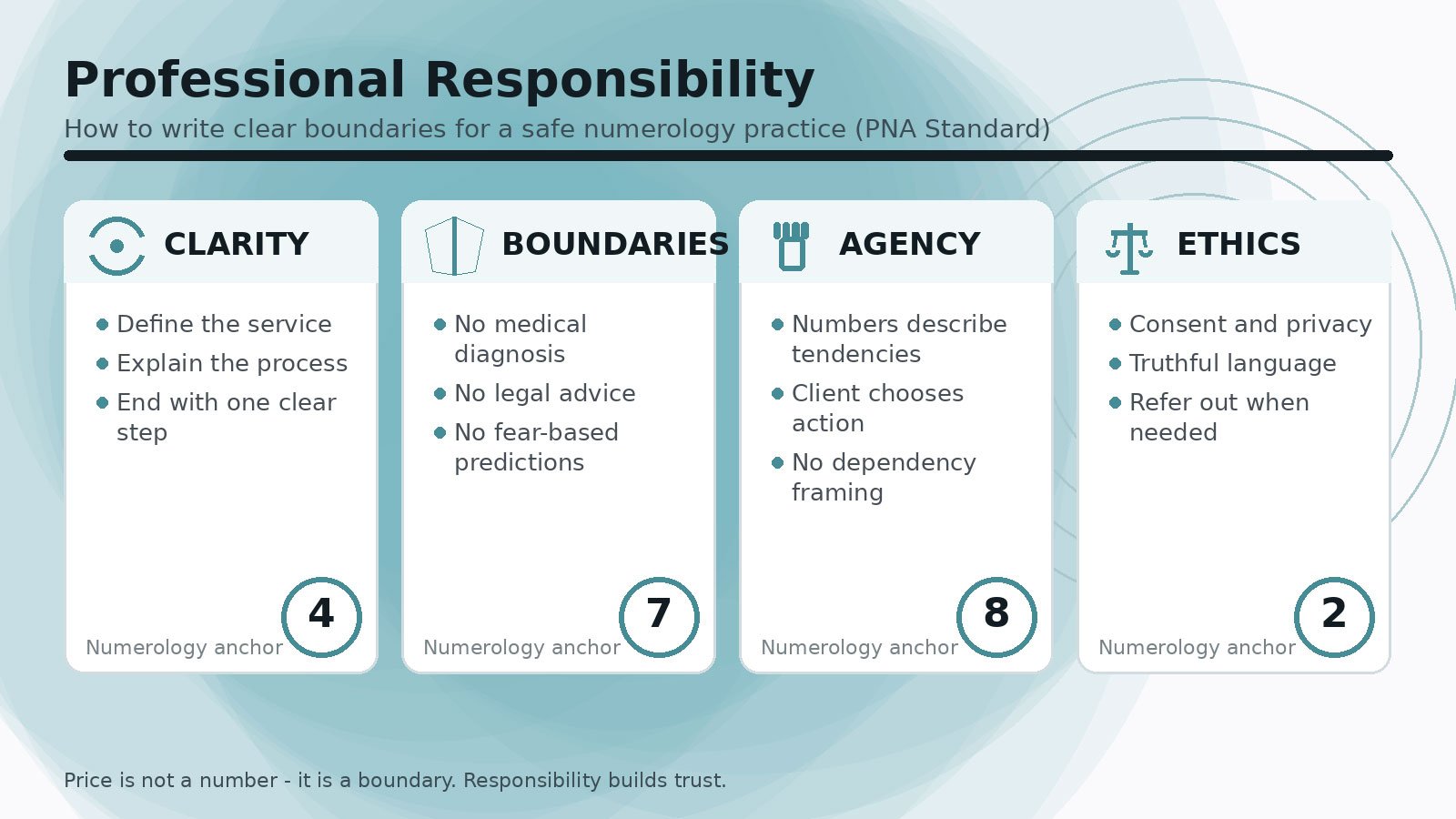
A clear responsibility statement is what makes a numerology website feel safe, ethical, and credible. This article teaches the PNA standard: how to define what your readings do provide (pattern clarity, stress mode mapping, timing strategy, practices, and metrics) and what they do not provide (medical diagnosis, legal advice, and unavoidable predictions) without sounding cold or legalistic. You’ll learn how different number patterns experience disclaimers and responsibility language, and how to adapt your phrasing for dominant numbers, Heart needs, missing numbers, stress mode, master numbers 11/22/33, and timing cycles like personal years 2, 7, 8, and 9. The article includes three website-ready versions (ultra-short, short, and full policy page), a 30-second session opening script, number-based responses to “tell me what will happen,” a client-friendly FAQ section, and a practical case example. The result is a trust-building framework that reduces anxiety, prevents dependency, increases professionalism, and makes your numerology practice feel modern and grounded.

Consent, Privacy, and Session Documentation - A Numerology Protocol That Protects the Client and You

Consent, Privacy, and Session Documentation - A Numerology Protocol That Protects the Client and You

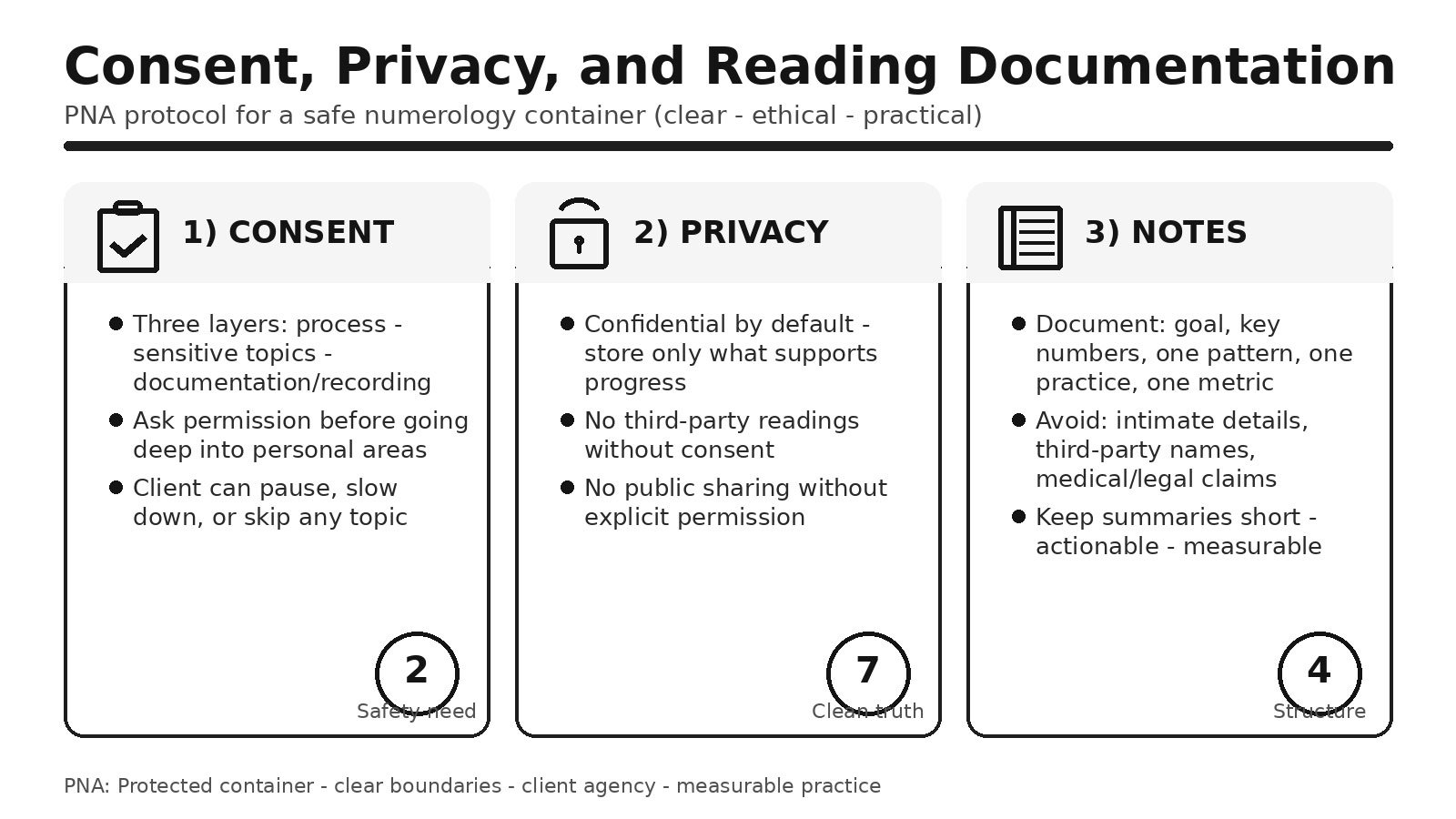
Consent, privacy, and documentation are what turn numerology into a safe, modern, professional container. This article teaches the PNA protocol: three layers of consent (process consent, sensitive-topic consent, and documentation/recording consent), practical privacy standards for website and sessions, and a clean documentation system that separates facts from interpretations. You’ll learn to adapt consent language, pacing, and note-taking style to different numerology patterns using dominant numbers, Heart numbers, missing numbers, stress mode, master numbers (11/22/33), and timing cycles (personal year/month/day). The article includes ready-to-use scripts, a repeatable documentation template, ethical handling for third-party requests, and number-based micro-metrics that make growth measurable. The result is a high-trust practice that reduces overwhelm, prevents dependency, protects privacy, and helps clients grow through clear, grounded numerology.

Handling Questions About Health, Legal Issues, or “Fate” - A Numerology-Based Professional Response Protocol

Handling Questions About Health, Legal Issues, or “Fate” - A Numerology-Based Professional Response Protocol

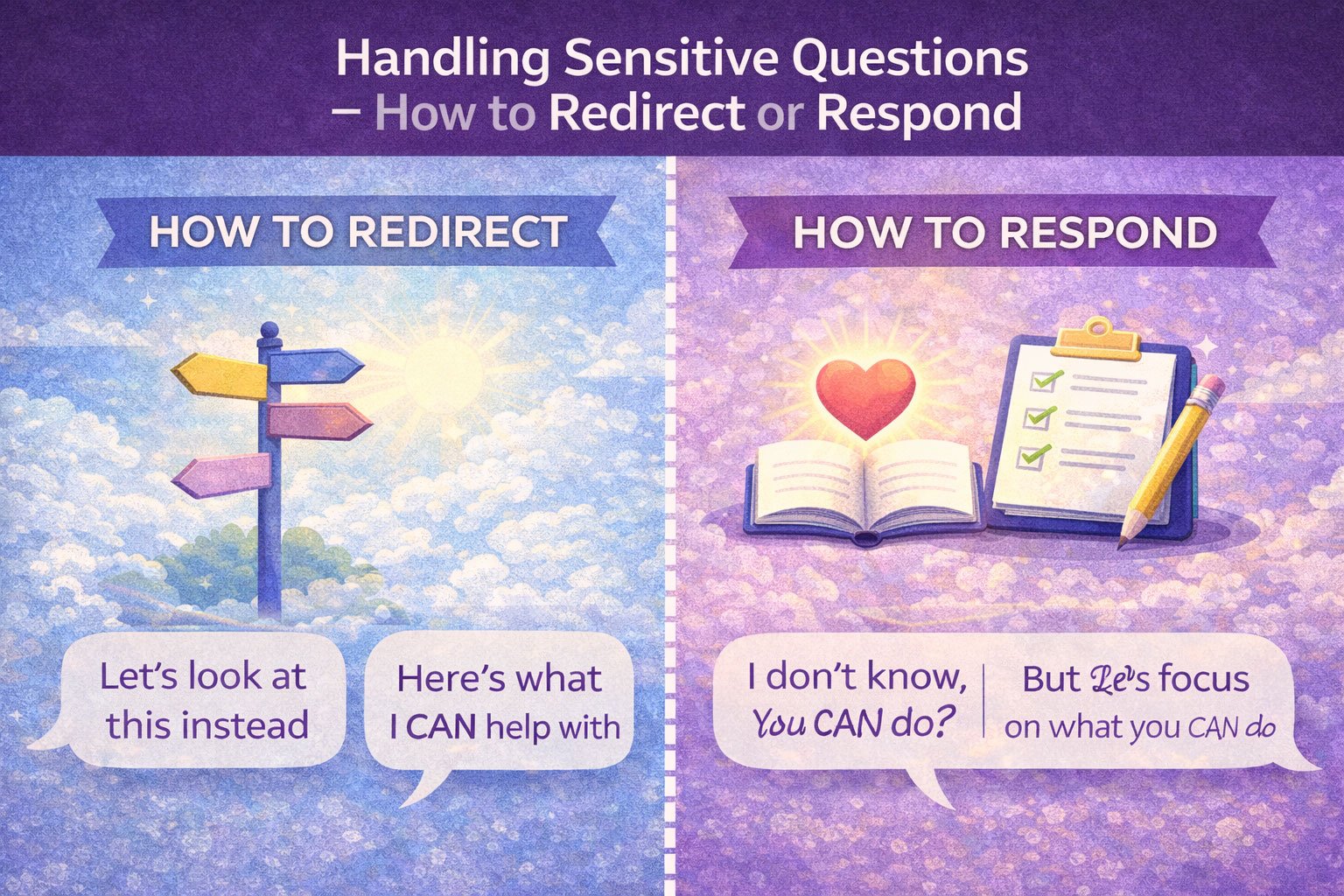
Clients will ask about health, legal outcomes, and “fate.” This article teaches the PNA response protocol: how to set ethical boundaries without sounding cold, how to transform an unsafe question (“What will happen?”) into a professional one (“How do I act wisely?”), and how to use deep numerology to deliver real value without predicting or diagnosing. You’ll learn to identify which number is asking (dominant numbers and Heart needs), how missing numbers create anxiety and boundary leaks, how stress-mode patterns distort perception, how timing cycles (personal year/month/day) change capacity, and how to work with master numbers 11/22/33 without overload. The article includes ready-to-use scripts, number-based response strategies, and a full case study showing how to reduce fear, prevent dependency, and turn heavy questions into measurable action steps.

Professional Boundaries: What You Say and What You Don’t Say - The PNA Numerology Standard

Professional Boundaries: What You Say and What You Don’t Say - The PNA Numerology Standard

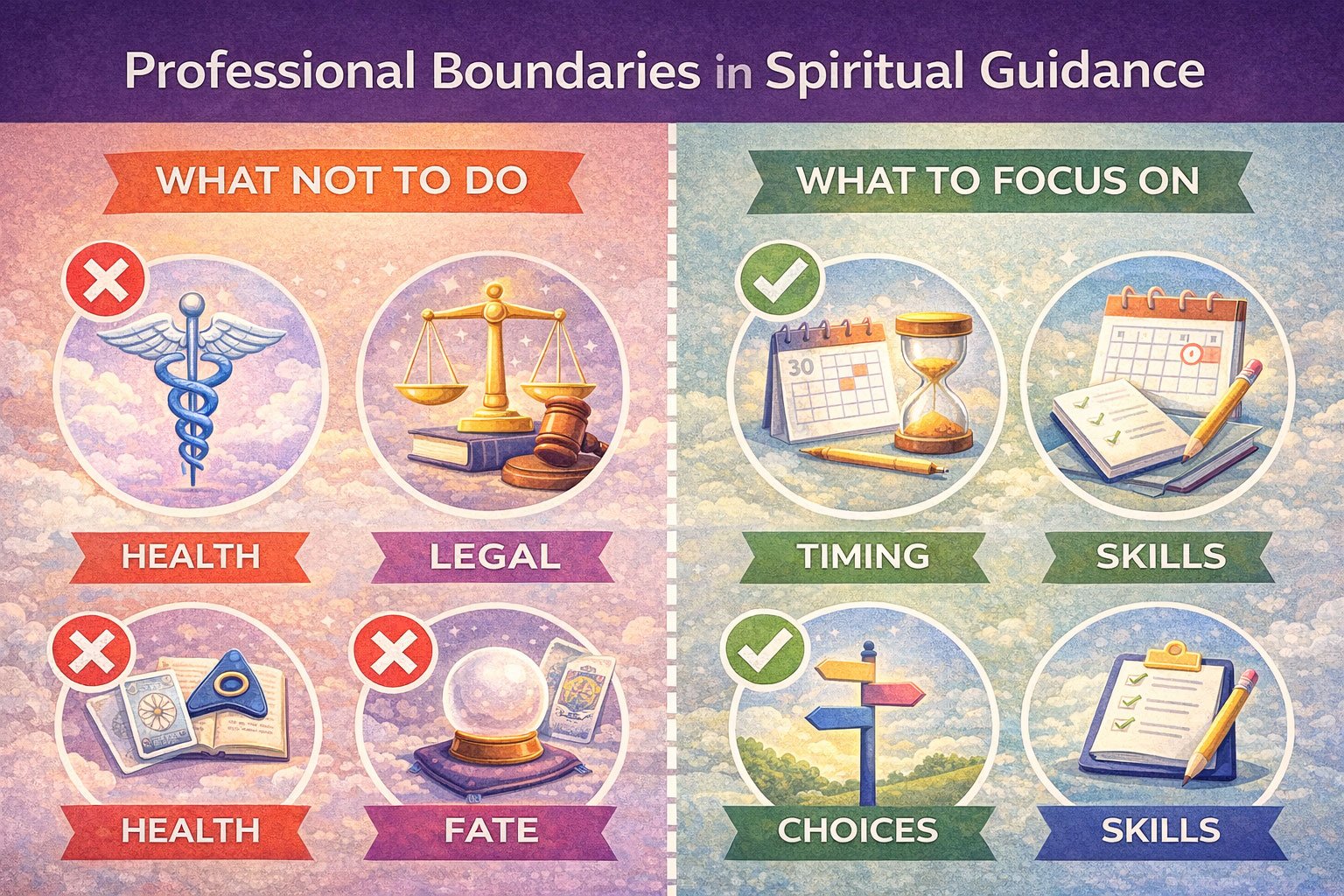
Professional boundaries are what turn numerology into a safe, ethical, high-trust practice. This article teaches the PNA standard: what you never say (fear-based predictions, health/legal claims, destiny verdicts, dependency language), what you say instead using the Pattern-Impact-Choice model, and how to describe shadow patterns as stress mode rather than identity. You’ll learn how to adapt boundary language to dominant numbers and Heart numbers, how missing numbers create automatic boundary leaks, how timing cycles (personal year/month/day) change a client’s sensitivity, and how to work with master numbers 11/22/33 without overload or pressure. The article includes 12 ready-to-use boundary sentences, a fate-question script, and a full case example showing how boundaries reduce anxiety and prevent dependency. The result is a client-centered numerology process that protects people, builds trust, and creates real progress.

How to Build a Process That Makes the Client Feel Safe - A Numerology Protocol for Trust, Boundaries, and Momentum

How to Build a Process That Makes the Client Feel Safe - A Numerology Protocol for Trust, Boundaries, and Momentum

Clients don’t continue a numerology process because the interpretation felt “accurate.” They continue because the process feels safe. This article teaches the PNA numerology protocol for designing safety using the full map: dominant numbers (Life Path/Expression) to understand operating style, Heart numbers to identify emotional safety needs, missing numbers to locate weak regulation links, stress mode to avoid shame-based language, master numbers (11/22/33) to adjust sensitivity and pressure, and timing cycles (personal year, month, day) to match the client’s real capacity. You’ll learn how to communicate numbers as pattern plus correction instead of labels, how to run a repeatable six-part session structure that creates predictability, how to tailor pacing and communication to each dominant number 1-9, and how to track progress with simple weekly metrics. The result is a clear, ethical, client-centered container that builds trust, prevents overwhelm, and turns numerology into a stable growth process clients want to stay in.

Small Rituals That Support the Process (Not “Magic”) - Numerology Rituals for Grounding and Momentum

Small Rituals That Support the Process (Not “Magic”) - Numerology Rituals for Grounding and Momentum

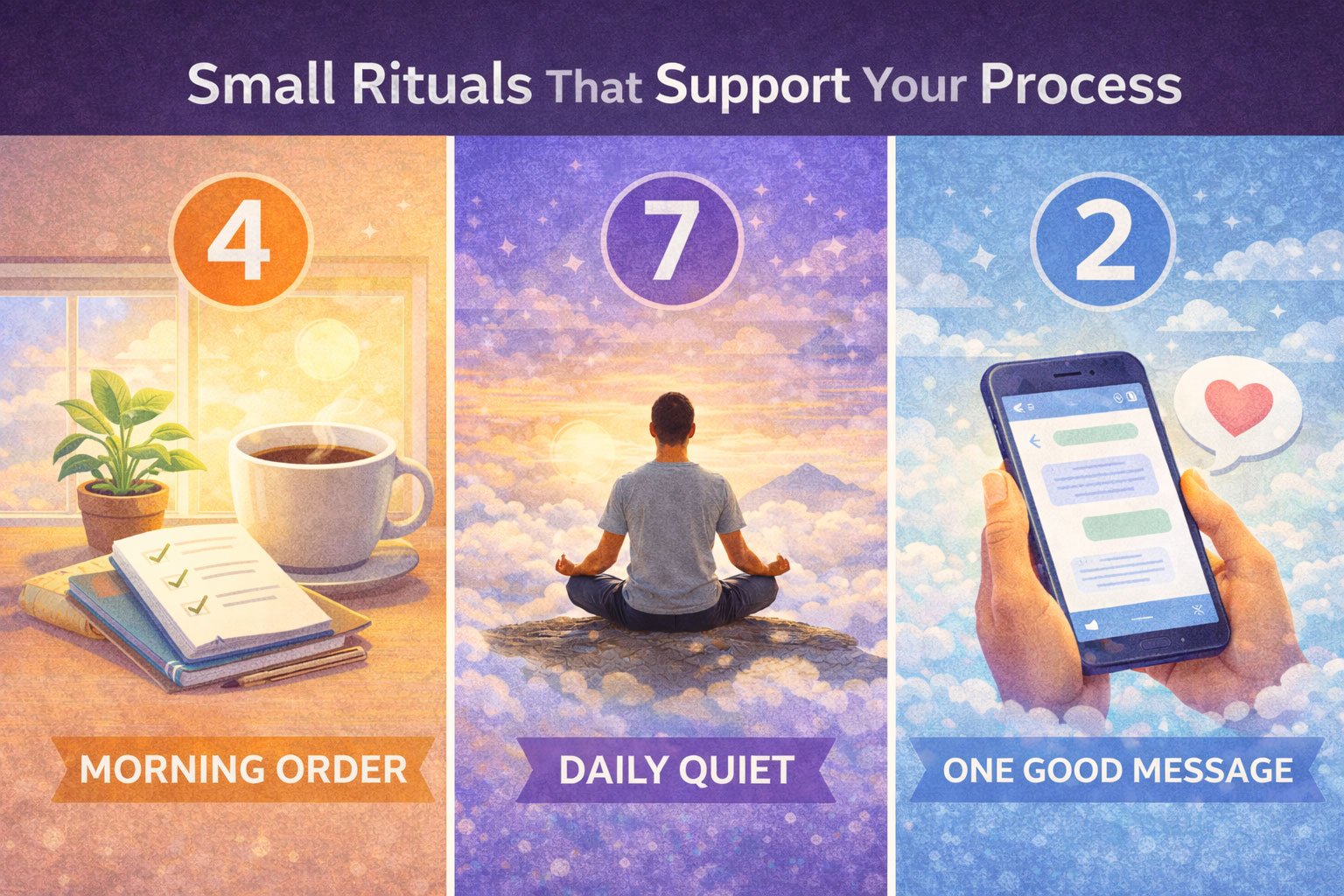
Small rituals can be a powerful growth tool when used correctly. This article teaches the PNA standard that separates ritual from “magic”: a ritual doesn’t bypass life, it aligns you for action. You get daily rituals for numbers 1-9, missing-number rituals that train the weak link in micro reps, timing-based rituals (personal day, month, year), and master number rituals for 11, 22, and 33 without drama. You also learn how to measure whether a ritual works by behavior change and recovery time, not by a temporary mood. This turns spirituality into a precise numerology-based practice that supports real progress.

Emotional Balance Through Tiny Habits - A Practical Numerology Protocol

Emotional Balance Through Tiny Habits - A Practical Numerology Protocol

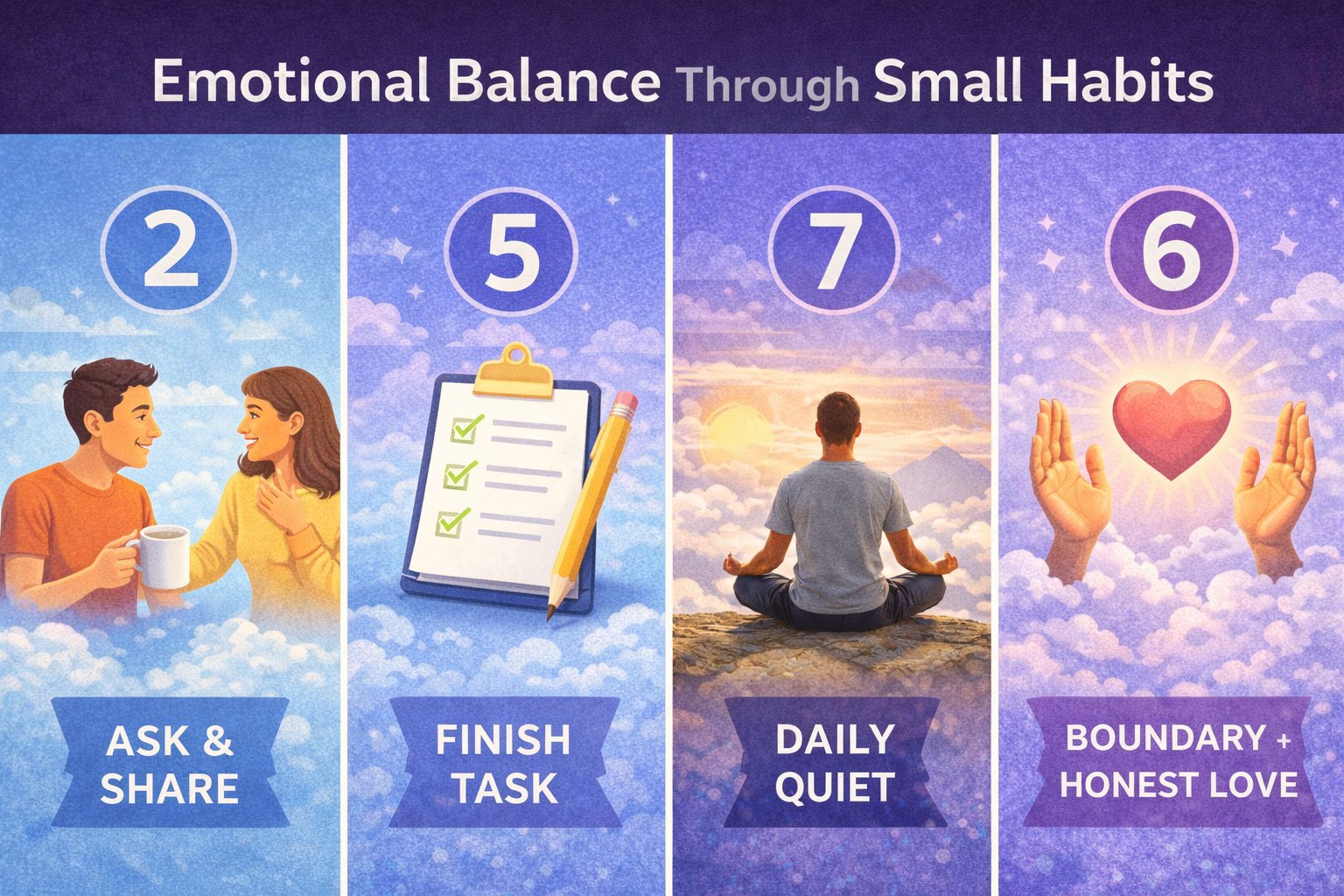
Emotional balance is not a personality trait and not a “spiritual level.” It’s a system built through small consistent habits. Numerology makes it precise: it reveals your stress pattern (dominant number), your emotional safety need (Heart number), and your weak regulation link (missing number). This article teaches the PNA protocol: “number in normal mode vs number under stress,” the three chart points that explain overwhelm, the three-anchor daily system (body, order, meaning) chosen by your numbers, number-based anchor sentences for real-time triggers, and missing-number training as a practical skill. You also get a full case study and a client-ready template. This turns spirituality into stable behavior that protects your relationships, health, and choices.

Meaning, Values, and Mission: Client Exercises That Make It Real

Meaning, Values, and Mission: Client Exercises That Make It Real

Mission is not one perfect answer, and it does not have to be a career. In the PNA standard, mission is consistent expression of values through small actions repeated over time. This article gives you a structured meaning-building method: how to separate excitement from mission, real values from “should” values, seven practical exercises (alive moments, jealousy as compass, intolerance as value, value reduction, repetition timeline, meaning-week experiment), a clean mission-sentence formula, and a 30-day process with measurable metrics. This helps clients move from vague searching to a practical direction that creates energy and results.

Intuition vs Imagination: How to Stay Grounded

Intuition vs Imagination: How to Stay Grounded

Intuition is powerful, but without grounding it is easily confused with imagination, anxiety, hope, or control needs. This article teaches the PNA standard for clean discernment: eight practical differences between intuition and imagination, five diagnostic questions that return you to facts, body signals, and stability, common mistakes like mind-reading or turning signs into commands, and the core tool of running a small experiment before making a big decision. You also get the “three layers” method (fact-story-need) and a full case study showing how to turn a feeling into responsible action. This keeps intuition as a gift and imagination as creativity, without turning spirituality into confusion.

How to Talk About Spirituality Without Being Vague

How to Talk About Spirituality Without Being Vague

Spirituality does not need to be vague. This article teaches how to talk about spirituality in a clean, professional language that connects directly to real life: emotions, values, boundaries, and decisions. You get the PNA model that identifies three forms of vague spirituality (inspiration without responsibility, spiritual talk as shelter from fear, spirituality as identity), practical replacements for common clichés, five grounding anchors that bring any conversation back to reality, a set of deep questions that create truth without drama, and a working template that turns insight into weekly practice and measurable metrics. This turns spirituality into real growth, not pretty words.

Subscribe for Full Access

Learn and deepen your numerology knowledge with our professional articles

Subscribe for Full Access

Accessibility

Text Size
Display
Reading
Spacing