Karmic Debt Numbers 13, 14, 16, 19 Explained (Clear and Practical)
Karmic debt numbers are often presented in a dramatic way. A practical approach is calmer: these numbers describe recurring lessons and growth requirements. They are not a curse. They are a pattern you can improve.
This guide explains 13, 14, 16, and 19, how they typically show up, and what to do with them in a responsible reading.
What are karmic debt numbers?
In many numerology traditions, certain compound numbers are associated with lessons that repeat until the person develops a specific skill. The most common set is:
- 13 (reduces to 4)
- 14 (reduces to 5)
- 16 (reduces to 7)
- 19 (reduces to 1)
The reduced number is still the foundation. The compound number adds the lesson angle.
How to read karmic debt numbers correctly
- Check where the number appears (Life Path, Expression, Soul Urge, Personality, or other tools)
- Read the reduced number first (4, 5, 7, 1)
- Add the karmic lesson as a "growth requirement"
- Translate it into one practical habit
Karmic debt 13/4
Theme: work, discipline, structure. Lesson: results require consistent effort, not shortcuts.
- How it shows up: cycles of starting strong then dropping routine, frustration with slow progress, resistance to details
- Shadow side: procrastination, blaming the system, avoiding routine, seeking "magic fixes"
- Growth strategy: build small daily discipline, focus on process over mood, track progress in a simple system
- Helpful question: "What system will make this easy to repeat?"
Karmic debt 14/5
Theme: freedom and change. Lesson: freedom works only with boundaries and responsibility.
- How it shows up: impulsive decisions, extremes, difficulty with moderation, quick boredom
- Shadow side: chaos, overindulgence, burning bridges, starting too many things at once
- Growth strategy: practice "freedom with rules": one commitment + one chosen flexibility, build a moderation habit
- Helpful question: "What is my non-negotiable this month?"
Karmic debt 16/7
Theme: truth, humility, inner growth. Lesson: ego correction and deeper awareness.
- How it shows up: sudden resets, disillusionment, relationship lessons, spiritual awakening, letting go of illusions
- Shadow side: bitterness, isolation, cynicism, spiritual bypassing
- Growth strategy: choose truth over image, slow down, rebuild on real values, practice honest self-review
- Helpful question: "What am I ignoring because it hurts my identity?"
Karmic debt 19/1
Theme: independence and leadership. Lesson: lead without arrogance, stand alone without isolating.
- How it shows up: needing to do everything alone, pride, difficulty receiving help, leadership pressure
- Shadow side: stubbornness, blaming others, using power to protect ego
- Growth strategy: practice healthy interdependence, lead with service, define clear roles and ask for support
- Helpful question: "Where can I be strong and still let others contribute?"
How karmic debt interacts with the rest of your chart
- If a karmic debt appears in a core number, it becomes a central storyline
- If it appears in a secondary tool, it can be more situational
- Timing can activate the lesson more strongly during certain years or months
Common myths
- Myth: karmic debt means bad luck. Truth: it means repeated lessons until skills improve.
- Myth: you cannot change it. Truth: habits and decisions are exactly what the lesson is about.
- Myth: it overrides the rest of the chart. Truth: it is one layer, not the whole identity.
Next step
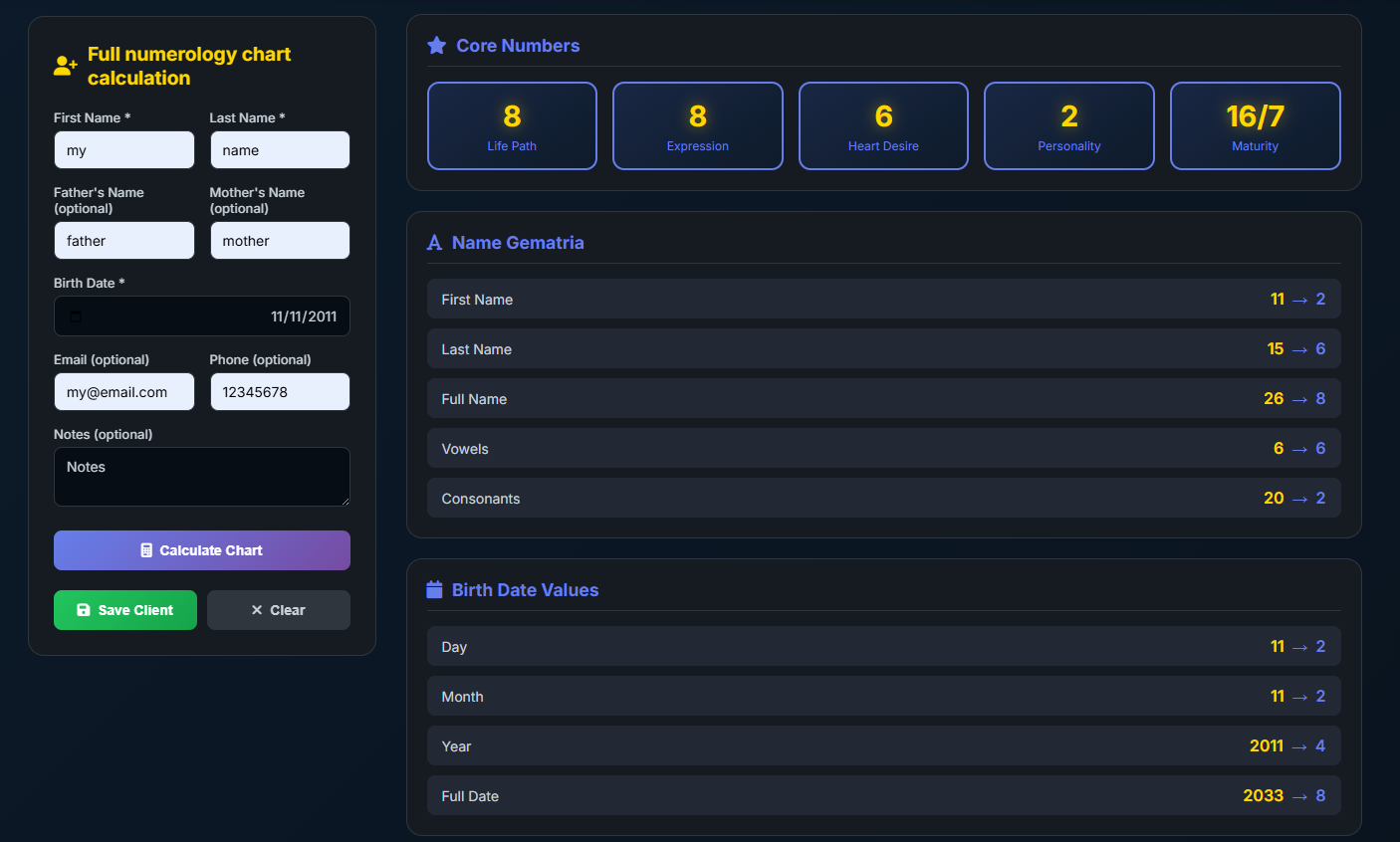
Generate your chart and check whether 13, 14, 16, or 19 appears in your key positions. Then choose one growth habit to practice for the next 30 days.
Calculate your numerology chart
The PNA calculator computes all core numbers for free. PRO extends it to 750+ values across 31 modules.
Free calculator → PRO calculator · 750+