
Professional Numerologist - What It Really Means, Skills to Build, and How to Stand Out
The phrase professional numerologist can sound like branding, but in practice it describes a very specific set of skills. A professional is someone who can calculate consistently, interpret clearly, communicate responsibly, and turn a numerology chart into useful guidance that helps a client make better decisions.
Anyone can list meanings for numbers 1-9. Professional work is different. It is a method. It is structure. It is the ability to read combinations, add timing, and finish with a practical plan - without fear, without absolute claims, and without confusion.
This guide breaks down what professionalism means in numerology, how to develop the skills that create trust, and how to differentiate your practice in a way that feels real and credible.
What clients actually expect from a professional numerologist
Most clients are not looking for mystical entertainment. They want clarity and direction. In real sessions, clients commonly want:
- Clarity: a simple explanation of what the chart says and why it matters.
- Specificity: insights that feel personal, not generic.
- Practical outcomes: clear steps, habits, or decision guidance.
- Timing: an answer to “what now?” and “what should I focus on?”
- Respect: responsible language, boundaries, and ethical delivery.
Professionalism is measured by how consistently you deliver these outcomes.
The 7 core skills of a professional numerologist
1) Method consistency (your rules are clear)
Professional readers can explain their calculation rules in plain language. They stay consistent across charts and across tools. Consistency builds trust because the client feels you are not improvising the method as you go.
To develop consistency, define and document your rules:
- Which mapping system you use (for example, Pythagorean).
- How you reduce totals and how you treat master numbers.
- How you handle compound totals and what you do with them.
- Which name rule you use (birth name, current name, common usage) and why.
When your method is stable, your interpretation becomes sharper. When your method is changing, your language becomes uncertain.
2) Clean calculation workflow (you avoid preventable errors)
Errors destroy credibility. A professional uses a reliable workflow:
- Collect accurate spelling and the exact birth date.
- Use one consistent calculator or calculation sheet.
- Double-check totals on the key numbers.
- Record the chart in a clear format you can reference later.
This is one reason calculators and tools matter: they reduce mechanical errors and free time for interpretation.
3) Structured interpretation (you do not ramble)
A professional does not “talk around” the chart. They use structure. One powerful structure is to interpret each key number with a stable template:
- Best expression: what the number looks like when balanced.
- Stress expression: what happens when it is out of balance.
- Need: what helps the person stay in the best expression.
- Action: one habit or step to practice for 30 days.
This template prevents generic readings. It also makes your sessions repeatable and improves your report writing.
4) Combination reading (the professional leap)
Beginners read numbers as separate labels. Professionals read interactions. This is the skill that makes your interpretation feel accurate and personal.
High-value combination frameworks include:
- Inner vs outer: Soul Urge vs Personality. What the person needs inside vs how they appear outside.
- Direction vs execution: Life Path vs Expression. Where they are heading vs how they build it.
- Dominant themes: repeating numbers across key positions.
Example combination insight: Soul Urge 2 with Personality 8 is not a contradiction. It is a balance plan. The person may appear strong, ambitious, and controlled, while internally needing connection, cooperation, and emotional safety. A professional interpretation explains how to protect the inner need while using the outer strength. You finish with practical behavior changes: boundaries, communication rules, and partnership habits.
5) Timing and strategy (you answer “what now?”)
Professional readings become valuable when they connect the chart to timing. Timing tools are not about fear-based prediction. They are about strategy, focus, and planning.
Core timing tools professionals use:
- Personal Year: the main theme of the year and the right priorities.
- Personal Month and Day: short-term focus windows.
- Pinnacles: long life phases and major growth themes.
- Challenges: recurring friction patterns that train maturity.
When you add timing, the client leaves with direction. Without timing, the client leaves with a description.
6) Ethical communication (you avoid fear and absolutes)
Professional work is responsible. Ethical delivery includes:
- no guaranteed predictions (“this will happen for sure”)
- no fear language (“this is a terrible year”)
- no medical or legal claims
- choice-based language (tendencies, options, if-then guidance)
- respect for privacy and boundaries
Ethics is not a limitation. It is what creates trust and long-term referrals.
7) Professional output (reports, summaries, and follow-up value)
A professional numerologist often provides a readable summary or report. This increases perceived value and helps clients implement the guidance.
A strong report format:
- Summary first: the main storyline in 5-10 bullets.
- Core numbers: strengths, stress patterns, and actions.
- Combination insight: one central tension and a balance plan.
- Timing now: personal year focus and best actions.
- Action plan: 3-5 steps for the next 30-90 days.
A professional numerology reading blueprint (use this every time)
If you want your sessions to feel professional immediately, use a stable blueprint:
- Intake: clarify one key goal or question.
- Quick storyline: deliver 5 bullet themes from the Big 4.
- Core reading: explain Life Path, Expression, Soul Urge, Personality using the same template.
- Combination insight: highlight one major alignment or tension and how to balance it.
- Timing: explain the current personal year and the right priorities.
- Action plan: 3 practical steps for the next 30 days.
This blueprint prevents rambling and makes the client feel you have a method.
How to stand out as a professional numerologist (without hype)
You do not need to claim special powers. Differentiation comes from structure and value. Here are practical differentiators:
- Clear templates: your language becomes consistent and specific.
- Tools and calculators: faster output, fewer errors, more time for insight.
- Case practice: you speak with confidence because you have repetition.
- Readable reports: clients remember clarity and action steps.
- Professional boundaries: people trust you when you communicate responsibly.
Quality checklist - assess your professionalism
| Question | Yes | Not yet |
|---|---|---|
| I can explain my calculation rules clearly and consistently | ||
| I use a stable template for interpreting each key number | ||
| I can produce one strong combination insight per reading | ||
| I include timing and translate it into planning advice | ||
| I avoid fear and absolute claims, and I communicate ethically | ||
| I can deliver a clear action plan for the next 30 days |
A practical 90-day plan to reach professional level
If you want to become professional faster, do not just study. Produce output. Here is a simple 90-day plan:
- Days 1-30: master the Big 4 and write 20 chart summaries using the same template.
- Days 31-60: focus on combination reading and timing. Write 10 inner vs outer insights and 10 personal year action plans.
- Days 61-90: write 5 mini reports and do 5 practice sessions with feedback.
This plan works because it forces repetition, structure, and improvement through output.
Frequently asked questions
Do I need certification to be a professional numerologist?
Not always. Professionalism is skill and ethics. Certification helps only when it includes standards, assessment, and real practice requirements. Many people have certificates but lack consistent method and structured delivery.
How many charts do I need to practice?
Many learners feel their first confidence jump after 20 charts. Consistent professional language often appears after 50 charts. Deeper pattern recognition grows over time as you approach 100 charts.
What improves my accuracy fastest?
Combination reading practice plus writing summaries. Writing forces clarity and prevents vague language. If you add timing and action plans, your sessions become more valuable immediately.
Is it better to read intuitively or methodically?
Professional work is both. Your method gives structure and credibility. Intuition can support nuance. The method should lead, and intuition should refine.
Conclusion
Being a professional numerologist is not about knowing more words. It is about consistent method, structured interpretation, combination skill, timing strategy, ethical communication, and practical outcomes. If you focus on those elements and practice with a clear workflow, you will stand out for the right reasons and deliver real value.
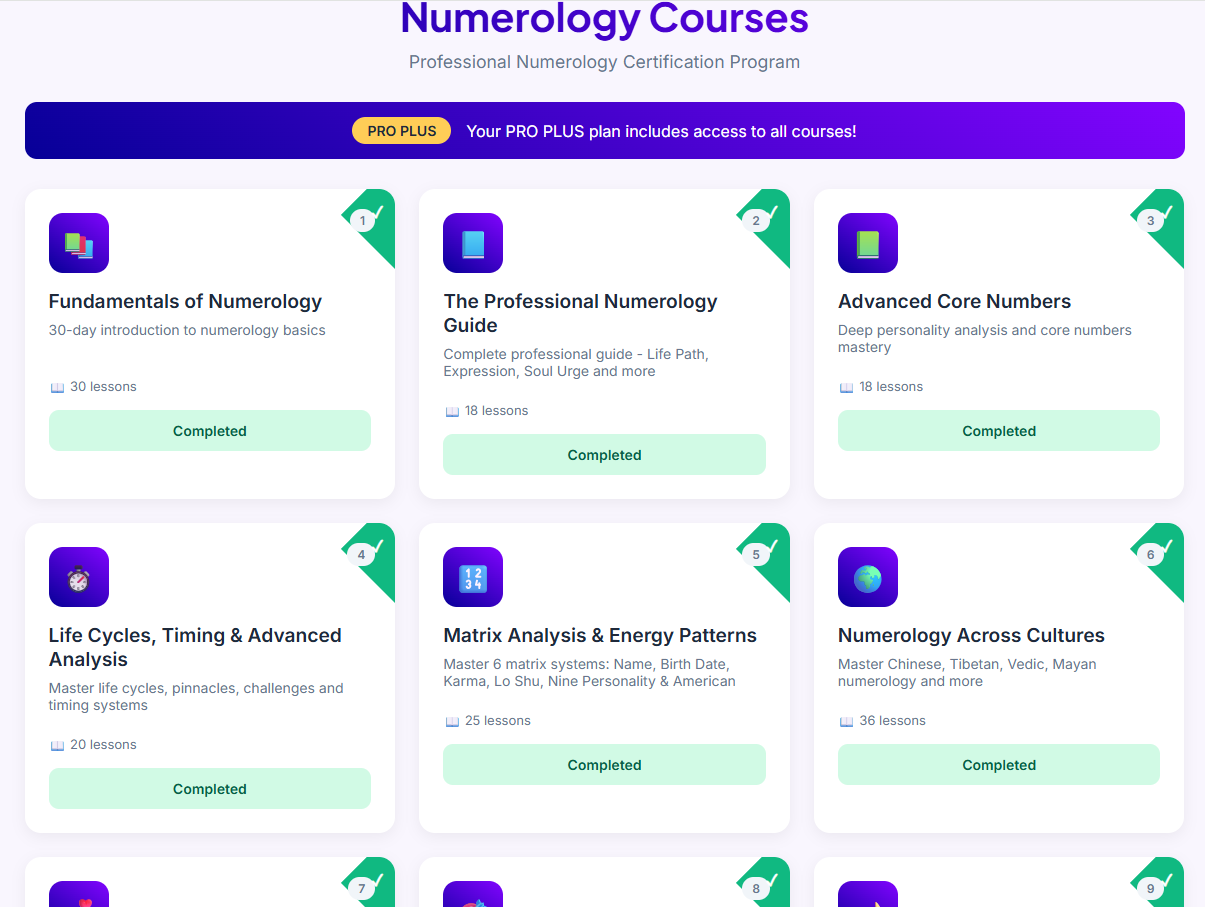
Next step: follow a structured course path, practice regularly, and use tools and templates to improve consistency. Then build a portfolio of clear summaries and reports.
Calculate your numerology chart
The PNA calculator computes all core numbers for free. PRO extends it to 750+ values across 31 modules.
Free calculator → PRO calculator · 750+